Germany does something to you the moment you arrive.
Maybe it is the immaculate train stations. Maybe it is the beer that genuinely tastes different when consumed in a 16th-century hall in Munich. Or maybe it is that moment on Day 2, standing before Neuschwanstein Castle and realising that no photograph has ever done it justice. Germany is the kind of country where every expectation holds — and then the place casually exceeds it anyway. So, whether you are searching for 7 days Germany itinerary by train, bus or cab, no need to worry. There are a variety of InterCity and InterRegio options, plus in today’s topic about 7 days Germany Itinerary, we will cover everything about your next Germany trip.
This 7 Days Germany Itinerary is designed for travellers who want the best of the country without spreading themselves too thin. Seven days is the sweet spot — long enough to move between regions, short enough to stay sane. You will start in Munich, move through the Romantic Road and the Black Forest, hit Dresden’s baroque skyline, Hamburg’s port energy, and Berlin’s layered, unresolved history — all within a single week.
Whether you are searching for a Germany itinerary 7 days plan from scratch, a 7 days in Germany itinerary that covers north and south, or need a complete Germany vacation planner to sharpen what you already have, this guide covers the route, the budget, the food, the visa requirements, and a bonus 10-day Germany itinerary for those with a little more time.
7 Days Germany Itinerary at a Glance
- Starting Point: Munich (Franz Josef Strauss International Airport or Munich Hauptbahnhof)
- Route: Munich → Neuschwanstein Castle → Romantic Road → Black Forest → Dresden → Hamburg → Berlin
- Ideal Duration: 7 days (see bonus 10-day Germany itinerary below for an extended circuit)
- Travel Style: City exploration, heritage, natural landscapes, and culinary experiences
- Best Time to Visit: April to June (spring) and September to October (autumn)
- Southern Germany Attractions: Neuschwanstein Castle, Black Forest, Lake Constance, Rothenburg ob der Tauber
- North Germany Tourist Attractions: Hamburg harbour, Miniatur Wunderland, Berlin Museum Island, Reichstag Dome
- Things to Do in Germany: Castle visits, beer garden hops, Rhine Valley cruises, Black Forest drives, and Germany food tours
- Average Daily Cost: INR 4,500–INR 27,000 per person (approx. USD 55–325) depending on travel style
- Germany Tour Packages for 7 and 10 Days: Available through SOTC, Thomas Cook India, MakeMyTrip, and operators like TUI Germany and DER Touristik
- Best For: History lovers, architecture enthusiasts, first-time European visitors, couples, and families
- Travel Tip: Book Deutsche Bahn (DB) rail tickets in advance — a 7-day consecutive Eurail Germany Pass (approx. EUR 220 / INR 19,800 / USD 238) saves significantly over individual ticket prices. Always validate your ticket before boarding regional trains; the on-the-spot fine is EUR 60 (INR 5,400 / USD 65).
Price Disclaimer: All costs mentioned in this 7 Days Germany Itinerary are approximate estimates based on 2025 exchange rates (1 EUR ≈ INR 90 / USD 1.08) and are subject to change based on season, operator, availability, and individual travel preferences. Always confirm current rates with airlines, hotels, and tour operators before booking.
About Germany — The Country Behind the Itinerary
Germany sits at the geographic and cultural heart of Europe, bordered by nine countries. At 357,000 sq km, it is the seventh-largest country on the continent — and one of the most diverse for a traveller covering ground quickly.
Before 1835, before the trains and the motorways and the rail passes, Germany was a loose collection of kingdoms, duchies, and free cities. The unification of the German states did not happen until 1871, under Bismarck. Less than a century later, the country was divided by a wall. And then, in 1990, it was reunified in one of modern history’s most consequential political events. Walking through Berlin, you read this history in the architecture, which is, for most travellers, the most vivid history education they will ever receive.
Practically speaking, Germany has extraordinary infrastructure. The rail network is one of Europe’s most extensive. Germany boasts a plethora of tourist spots to visit for families and couples. The cities have world-class public transport. And the food — covered in full in the Germany food tour section below — is considerably better than its international reputation suggests.
Day-by-Day: 7 Days Germany Itinerary
Getting to Germany is very easy and affordable via well-developed, connected, and affordable airports. Check out the latest flight deals and tickets to begin your Germany Itinerary. In today’s post, I will try to cover the best of Germany’s itinerary in one week.
Day 1: Munich — Arrival and Old Town Immersion
You should start your trip from Munich – the gorgeous capital of Bavaria. Munich is cosmopolitan without being overwhelming, historical without being stuffy, and it has beer gardens that function as genuine social infrastructure rather than tourist traps.
If you have flown into Munich Airport, the S-Bahn S1 or S8 line reaches the city centre in roughly 40 minutes. Marienplatz — the centre of the old town — is a 30-minute walk from Hauptbahnhof, or one U-Bahn stop.
1) Munich Old Town (Altstadt)
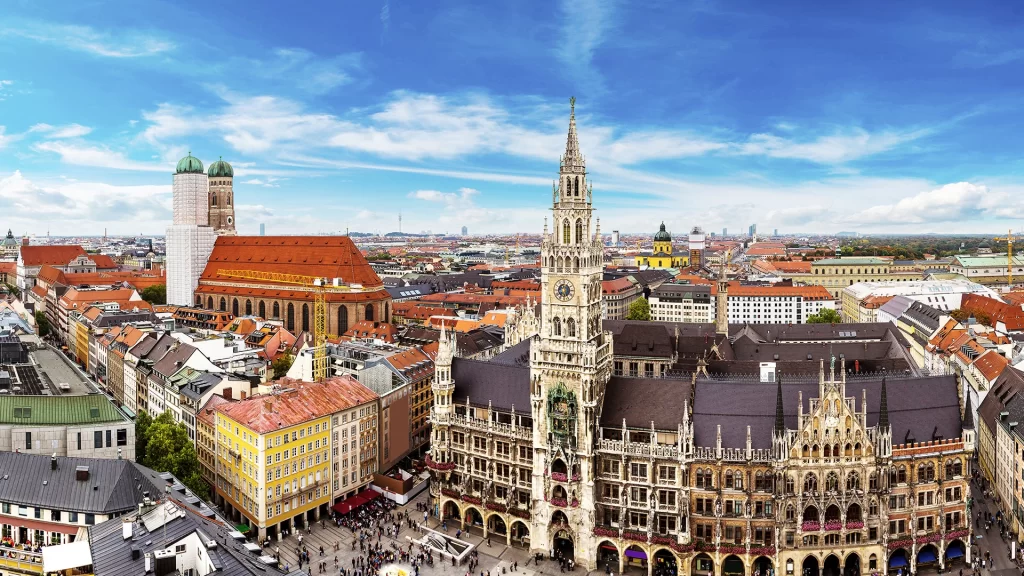
The Gothic-style Neues Rathaus (New Town Hall) on Marienplatz anchors the old town, its famous Glockenspiel carillon performing at 11 AM and noon daily. The adjacent Altes Rathaus (Old Town Hall), dating to the 15th century, houses a toy museum. Together, they form the architectural centrepiece of the city.
Also, check – Germany Tour Guide: 13 Coolest Things to Do in Germany
2) Englischer Garten
Englischer Garten, an 18th-century park, is one of the largest urban parks, larger than New York’s Central Park at 3.7 sq km. Englischer Garten was established in 1789 during the reign of Charles Theodore, Elector of Bavaria. Its traditional and delightful beer gardens are especially located at the lakeside. This place is chirping with visitors during the summer, and you can relax after having lunch (eating and drinking).
3) St. Peter’s Church (Peterskirche)
Next is St. Peter’s Church. It’s the oldest church in the area. Various elements comprise mixed architecture, including Asamkirche (Asam Church), a Baroque-style church. Admission to the tower is: INR 360 (approx. USD 4.30).
4) Deutsches Museum
There are so many museums in the town that you can visit to learn about history, sculpture, and art. The Deutsches Museum is famous for science and technology, spanning 73,000 sq m across 80 departments. Glyptothek is the house of solely ancient sculptures, and you will also find an Egyptian Art Museum. The admission fee is: EUR 15 (INR 1,350 / USD 16).
5) Viktualienmarkt
In the evening, you can visit the Viktualienmarkt, a more than 200-year-old market that has 100+ food stalls and a beer garden. Moreover, as a cheese lover, you don’t have to look further. Other than that, you can look out for meat, bread, and fresh flowers. This is the best casual Germany food tour stop in Munich.
6) Hofbräuhaus Munich
Even though Munich has a huge 3-floor beer hall, Hofbräuhaus feels like the 16th century, where you will also get amazing food. But you have to wait, as it always remains packed. So, you can end your first day here.
Day 2: Castle Watching — The Fairy Tale Detour
This is among the most photographed Germany tourist locations in the world and the most emotionally resonant. The castle delivers.
1) Neuschwanstein Castle
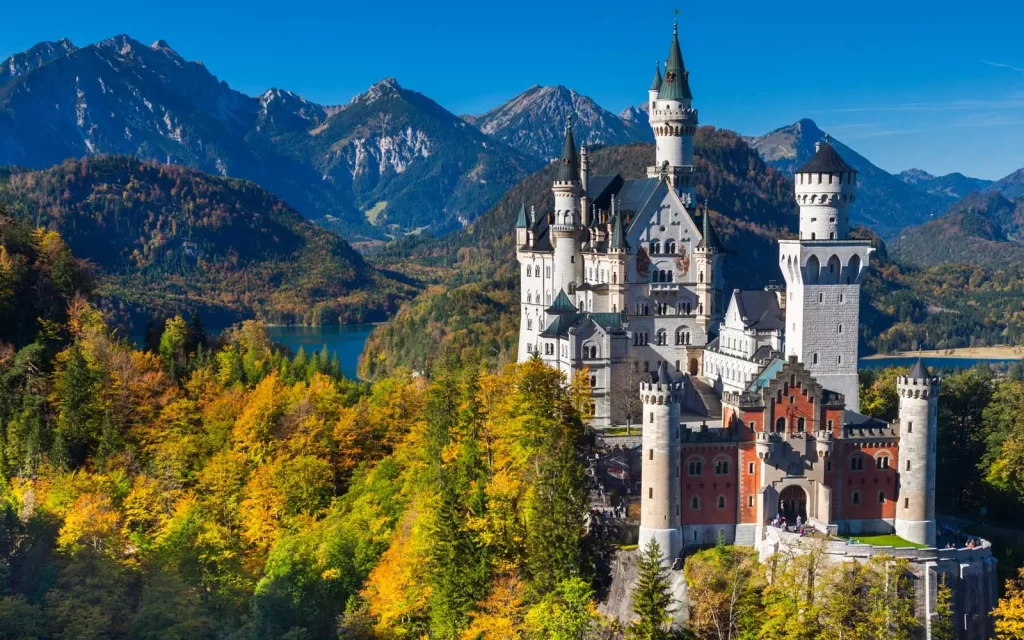
Neuschwanstein Castle was commissioned by King Ludwig II of Bavaria in 1868. It sits on a rocky outcrop above Hohenschwangau and is 2 hours away from Munich. The castle’s silhouette — all towers and turrets against forested Bavarian hills — allegedly inspired Walt Disney’s Sleeping Beauty Castle. Interior tours run every 30 minutes; book timed entry tickets online weeks in advance in summer.
2) Marienbrücke (Mary’s Bridge)
A footbridge 92 metres above the Pöllat Gorge, providing the most famous exterior view of the castle. Ten-minute walk from the castle itself; the view from here is worth the trip independently.
3) Heidelberg Castle
Moreover, you can explore Heidelberg Castle, which is about 3 to 4 hours away from Munich. However, the Schloss Heidelberg comprises the ruins of the 16th-century castle. It’s perched atop a hill. You can take the mountain railway (Bergbahn) to reach here. It is known as the world’s largest wine barrel.
4) Hohenschwangau Castle
King Ludwig II’s yellow childhood home, dating from the 1830s — smaller than Neuschwanstein, warmer in character, and consistently overlooked by visitors rushing to the main event.
You can even spend your evening at one of the lovely cafes, just like the museums in the city. As a cafe lover, you will get a cosy retro one, an Instagrammable one, a terrace one, and a modern one. Now, head back to Munich and end the day by going to one of the pub crawls in Munich to experience the nightlife.
While in Germany, you should also take care of: 11 Things to Avoid Doing In Germany for Tourists
Day 3: Romantic Road and Rothenburg ob der Tauber
Walking through the Romantic Road would be a great start to day three. Let’s move forward in this tour of the Germany Itinerary.
1) Romantische Straße
Drive south from Munich, or board the Romantic Road coach. The route passes through Augsburg (founded by the Romans in 15 BC — one of Germany’s oldest cities), Landsberg am Lech, and a sequence of half-timbered towns before reaching Rothenburg ob der Tauber in approximately 3 hours.
2) Rothenburg ob der Tauber
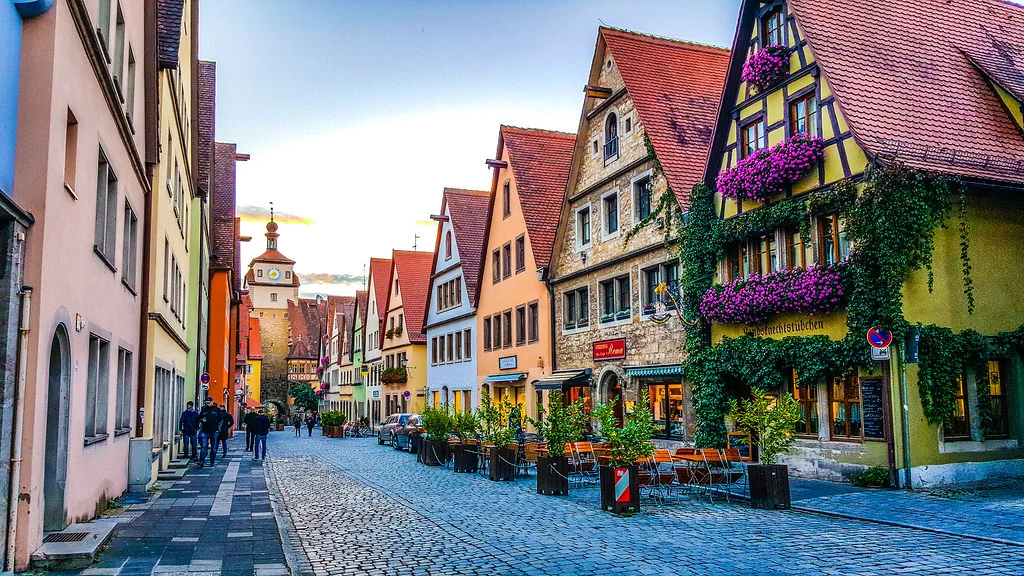
The name translates as “red fortress above the River Tauber.” Nearly the entire old town survives from the medieval period — walls, gates, market square, and all — making it one of the best-preserved walled towns in Europe.
- Kriminalmuseum: Five floors of medieval torture devices, legal instruments, and criminal history. Unexpectedly compelling for all ages.
- Deutsches Weihnachtsmuseum (Christmas Museum): Open year-round; a serious collection of Christmas decorations tracing the German Christmas tradition from the 1600s onwards.
- Roedertor Tower: Climb for the best aerial view of the town’s famous red rooftops.
- Night Watchman Tour: A nightly guided walk at 8 PM through the town’s alleys in full 15th-century costume. One of the most enjoyable evening experiences in Germany.
Day 4: The Black Forest and Lake Constance
Day 4 of the Germany 7 days itinerary moves into the deep south — forests, waterfalls, vineyards, and a lake shared with three countries.
1) Black Forest (Schwarzwald)
The Black Forest is one of the iconic forested and mountainous regions in Germany, popularly known as the birthplace of the Grimm Brothers’ tale of Hansel & Gretel. It takes a 3-hour drive to reach here from Rothenburg. However, it’s the perfect destination for a family filled with adventure and relaxation options, including Gothic-style hamlets and vineyards.
If you’re a foodie, check this – Culinary Tourism of Germany – 16 Places for Food Tour
2) Theme Park
If you are an adventure lover, you must visit Steinwasen Theme Park. It’s also known as Europa Park which is the 2nd largest theme park in Europe, with roller coasters and various themed rides. And, everyone, whether you’re a kid or an adult, you will love it!
3) Triberg Waterfall
Germany’s highest waterfall descends 163 metres in seven cascades through the forest. Multiple viewing platforms; accessible year-round.
4) Rhine Valley
A UNESCO World Heritage Site since 2002 — a 65-km gorge between Koblenz and Rüdesheim lined with medieval castles, volcanic crags, and Riesling vineyards. One of the most visually striking river corridors in Europe.
5) Lake Constance (Bodensee)
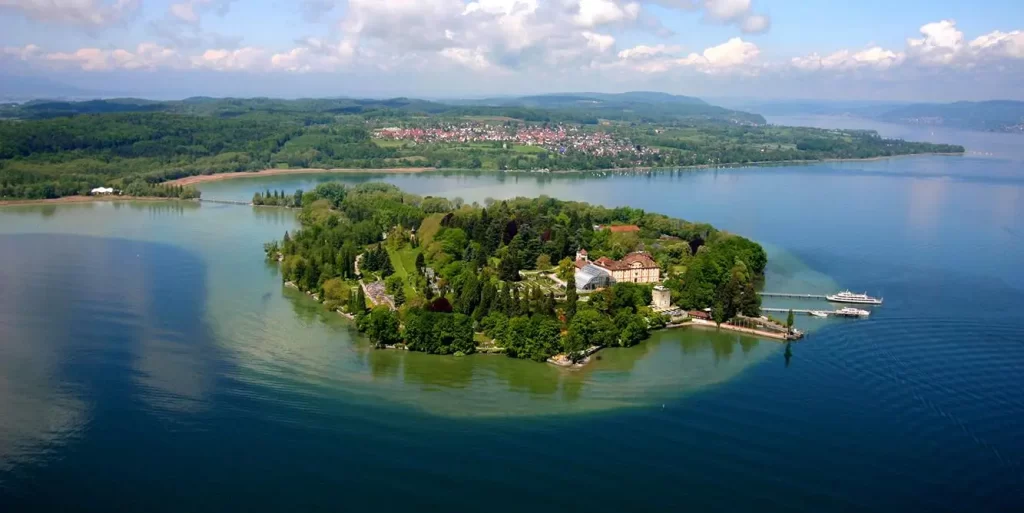
Let’s move ahead to another UNESCO World Heritage site, Lake Constance, also called Bodensee. It is 2 hours away and surrounded by four countries, giving a gorgeous view of the Alps.
Reichenau, a small island, is another UNESCO-listed site that is ironically the largest on Lake Constance. It has a monastery, named after the island and chapels dating back to the 9th century. You can enjoy the stunning view of Lake Constance from the island.
You can take a leisurely boat or ferry ride on the lake, enjoy a thermal bath, and ride on the Zeppelin to see Lake Constance from above. Enjoy the view of the sunset by the lakeside. Then, dine at one of the nearby restaurants, and don’t forget to taste the Lake Constance wine.
Germany is also ideal for eco tours. Know how – Ecotourism in Germany – Top 14 Eco-Tourist Places
Day 5: Dresden — Baroque Grandeur on the Elbe
The next stop in 7 days Germany Itinerary is the city of Dresden. Six to seven hours northeast of the Black Forest, Dresden is the capital of Saxony and one of the most visually complete baroque cities in Europe. The 7 day Germany itinerary takes its most dramatic architectural turn here.
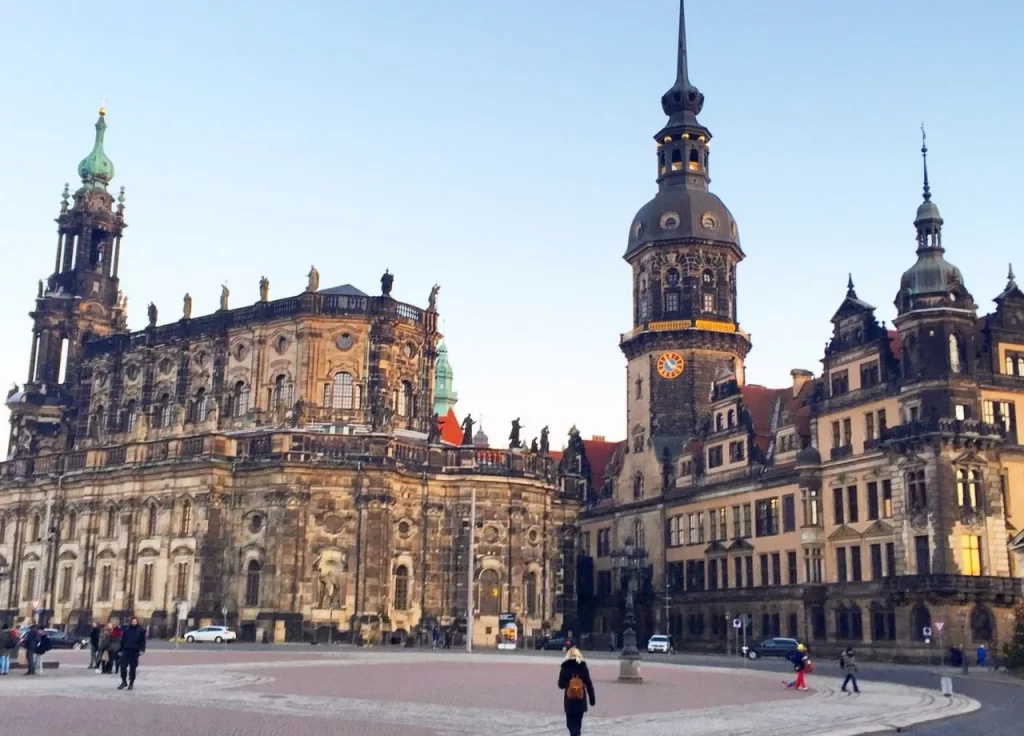
1) Dresden Frauenkirche (Church of Our Lady)
The original Romanesque church was rebuilt in Baroque style in the 18th century, destroyed in Allied bombing in 1945, left as a war memorial ruin for decades, then rebuilt and consecrated in 2005 following German reunification. Its bell-shaped dome defines the Dresden skyline. Entry is free; tower access requires a ticket (EUR 8 / INR 720 / USD 8.60).
2) Green Vault (Grünes Gewölbe)
The royal treasury of the Saxon electors — 3,000 treasures across two permanent exhibitions. Book tickets well in advance; same-day entry to the Historic Green Vault is not available. Admission fee is: EUR 14 (INR 1,260 / USD 15).
3) Zwinger Palace
A Baroque masterpiece completed in 1728, surrounding a courtyard originally designed for royal tournaments. Today it houses the Old Masters Picture Gallery (Raphael’s Sistine Madonna is here), the Porcelain Collection, and the Physics and Mathematics Salon.
4) Neustadt (New Town)
Dresden’s left bank — younger, more bohemian, with independent restaurants and galleries. Evening here is perceptibly different in character from the monumental right bank. Recommended for dinner and nightlife.
In Germany Itinerary, our next stop is Hamburg.
Day 6: Hamburg — Port Energy and Northern Character
Hamburg is Germany’s second-largest city and its principal port — the city where things to do in northern Germany feel entirely different in register from Munich or Dresden.
1) Chocoversum
As a chocolate lover, Chocoversum is the best place to step inside. It is an interactive chocolate museum tracing cocoa from plantation to bar — and letting you make your own. Unexpectedly enjoyable for adults.
You will get Willy Wonka’s chocolate factory, and you can learn how chocolates are made. The best part is that you can also create your own custom chocolate bar. Entry with workshop: EUR 19 (INR 1,710 / USD 20.50).
2) Miniatur Wunderland
The world’s largest model railway museum: over 1,500 sq m of miniature landscape, including working airports, cities across Europe, the American Southwest, and Scandinavia. Entry fee is: EUR 20 (INR 1,800 / USD 21.60).
3) Hamburg Dom
Have you ever heard of a festival which is held thrice a year? Well, Hamburg has such a festival, called the Hamburg Dom. It is held in Summer, Winter, and Spring over a period of a month each time. Moreover, it’s the longest festival in Germany.
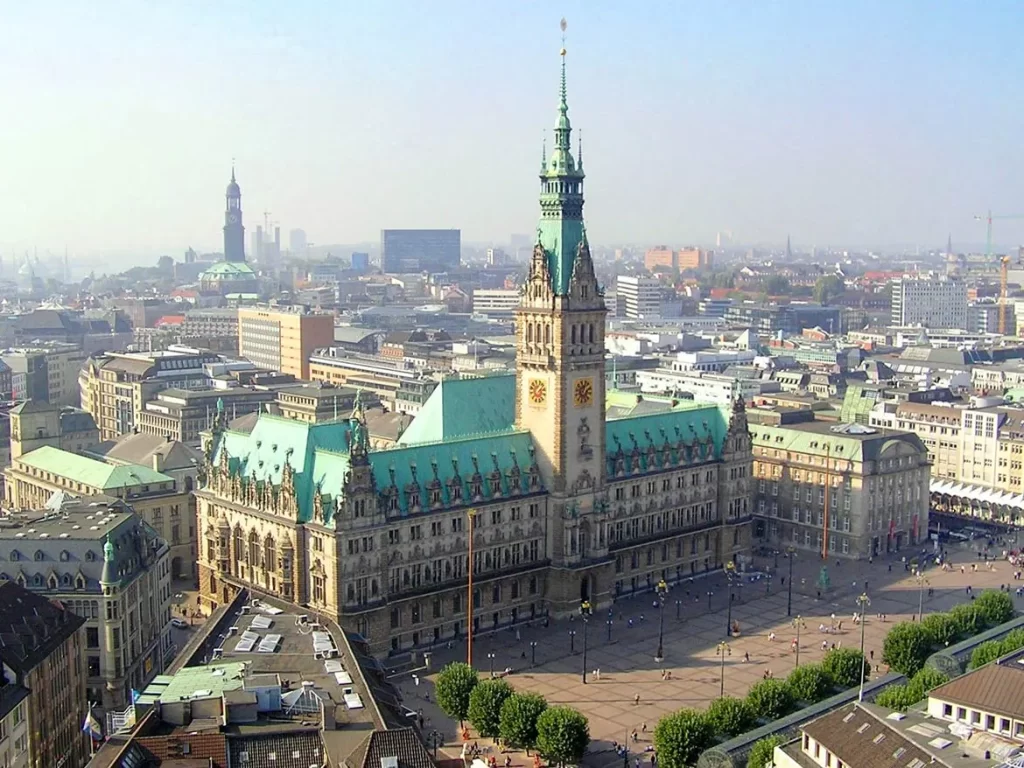
4) Hamburg Harbour and HafenCity
The largest inner-city urban development project in Europe, reshaping the historic Speicherstadt (UNESCO World Heritage Site) into a waterfront neighbourhood of restaurants, galleries, and the Elbphilharmonie concert hall. Walk the free Elbphilharmonie Plaza at 37 metres for panoramic harbour views.
5) Lake Alster
Besides the River, Hamburg also has Lake Alster in the heart of the city. You will find swans gliding gracefully over the water.
6) Reeperbahn
Hamburg’s entertainment district — music clubs, theatres, restaurants, and bars concentrated on a single kilometre. The Beatles played in clubs on Grosse Freiheit Street between 1960 and 1962; a small memorial marks the chapter.
Day 7: Berlin — The Final Act
There are hourly trains heading to Berlin from Hamburg that take about 90 minutes to reach your last stop on the 7 Days Germany Itinerary. There are so many places to see in Berlin that you should plan for a separate tour to Berlin.
1) Reichstag Dome
The glass dome above the German parliament, designed by Norman Foster and opened in 1999. Free to visit; register online before arriving. The spiralling internal walkway provides a 360-degree view of Berlin with a live audio guide narrating the buildings below.
3) Brandenburg Gate (Brandenburger Tor)
Next, come down on the roads for a walking tour of the Brandenburg Gate. It was a popular political gathering spot during the Cold War. Moreover, the Brandenburg Gate is the only surviving historic city gate that symbolises a reunified Germany.
4) Holocaust Memorial
2,711 concrete slabs of varying heights across a 19,000 sq m field near the Brandenburg Gate, designed by Peter Eisenman and opened in 2005. The underground information centre provides individual stories behind the statistics.
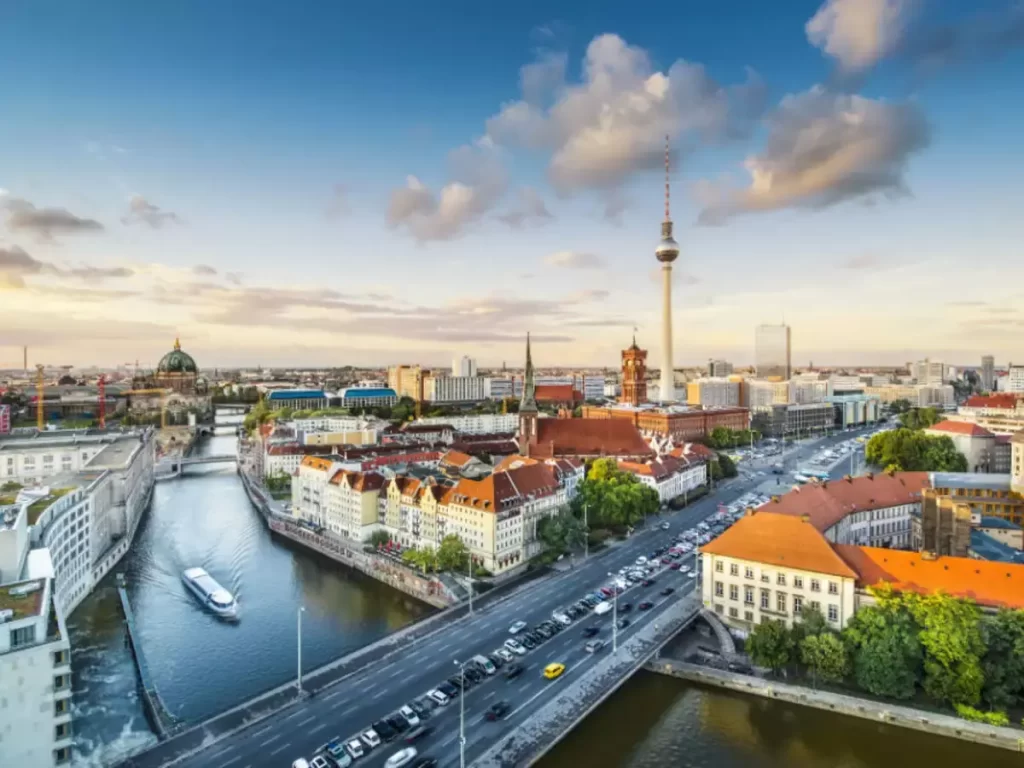
5) Berlin Wall (East Side Gallery)
The longest surviving section of the Berlin Wall — 1.3 km, painted with 105 murals by international artists. A heritage-protected open-air gallery along the Spree riverbank.
6) Museum Island
Five world-class museums on an island in the Spree River, collectively a UNESCO World Heritage Site. The Pergamon Museum (housing the Ishtar Gate of Babylon and the Market Gate of Miletus) is the unmissable anchor — book timed entry at least 2 weeks in advance.
7) Berlin TV Tower
From there, visit the 368 metres tall Berlin TV Tower (Berliner Fernsehturm) for aerial views of the city. You can chill at the cocktail bar for the last sundowner in Germany and enjoy the skyline.
8) Tiergarten
You can spend the last night at Tiergarten in Germany. It is the largest garden and a famous landmark in Berlin for a leisurely late evening stroll.
9) Kreuzberg
You can also go to the hip neighbourhood of Kreuzberg to chill at a cafe. There are so many fast-food joints and restaurants where you can enjoy craft beer. Even these neighbourhood clubs are open till the wee hours of the morning.
Places Covered in This 7 Days Germany Itinerary
A summary of the core places to visit in Germany across this route:
- Munich (Day 1): Old Town, Englischer Garten, Viktualienmarkt, Hofbräuhaus
- Neuschwanstein (Day 2): Fairy-tale castle, Marienbrücke, Hohenschwangau
- Rothenburg ob der Tauber (Day 3): Medieval walled town, Night Watchman Tour
- Black Forest and Lake Constance (Day 4): Triberg Waterfalls, Europa-Park, Reichenau Island
- Dresden (Day 5): Frauenkirche, Green Vault, Zwinger Palace
- Hamburg (Day 6): Miniatur Wunderland, Harbour, Reeperbahn
- Berlin (Day 7): Reichstag, Brandenburg Gate, Museum Island, Berlin Wall
Germany Food Tours — What to Eat and Where
Germany’s food reputation has suffered from the Bratwurst-and-Sauerkraut shorthand. A proper Germany food tour reveals something considerably more varied.
- Bavaria (Munich): Weisswurst with sweet mustard, Schweinshaxe (slow-roasted pork knuckle), Brezn (pretzels), and Masskrug beer from the Chinesischer Turm beer garden in the Englischer Garten.
- Hamburg: Labskaus (salted meat, potato, beetroot, and herring — a traditional sailor’s dish), Fischbrötchen (fresh fish sandwiches at the harbour), and oysters from the Alster.
- Berlin: Currywurst (sliced pork sausage with curry-spiced ketchup sauce, invented here in 1949), Döner Kebab (the Berlin version is distinctly different from its Turkish original), and Berliner Pfannkuchen (doughnuts with plum jam).
- Rhineland: Sauerbraten (vinegar-marinated pot roast) and Altbier from a traditional Düsseldorf Brauhaus.
Formal Germany food tours are available in Munich (Viktualienmarkt food walks), Hamburg (harbour seafood tours), and Berlin (Kreuzberg street food market tours). Food tours Germany-wide are bookable through GetYourGuide and Airbnb Experiences; prices start from approximately INR 1,800 (USD 22) per person for a 2-hour food tour in Germany.
For a detailed travel guide about Germany, read this blog: Germany Tourism Guide – Places, Cuisines, Essential Gadgets, and Much More!
How to Reach Germany
By Air
Germany has five major international airports: Frankfurt (FRA), Munich (MUC), Berlin Brandenburg (BER), Hamburg (HAM), and Düsseldorf (DUS). Frankfurt is the busiest — the third-busiest airport in Europe — and offers the widest connections from Asia and India.
From India: Lufthansa, Air India, and Gulf carriers (Emirates, Etihad, Qatar Airways) operate regular services. Typical flight times: Mumbai–Frankfurt (9.5 hours direct); Delhi–Frankfurt (8.5 hours direct). Return fares from India to Germany: approximately INR 40,000–INR 90,000 (approx. USD 480–1,080) depending on season and booking lead time.
By Rail
Deutsche Bahn (DB) connects all major German cities. ICE trains between Hamburg and Berlin run every 30 minutes. The Eurail Germany Pass is recommended for this 7 Days Germany Itinerary — a 7-day consecutive second-class pass costs approximately EUR 220 (INR 19,800 / USD 238). Book at eurail.com before departure.
By Road
Germany’s autobahn network covers 13,000 km. Car hire starts from approximately INR 3,500 (USD 42) per day for a compact vehicle. A northern Germany road trip by car from Hamburg — along the North Sea coast through Lübeck, across Schleswig-Holstein, and through the Frisian marshlands — is one of the finest self-drive routes in northern Europe.
Average Travel Cost in Germany (Per Person)
- Budget traveller (shared transport, hostel/budget hotel, local restaurants): INR 4,500–INR 7,200 per day (approx. USD 55–87)
- Mid-range traveller (rail pass, 3-star hotel, restaurant meals): INR 9,000–INR 18,000 per day (approx. USD 108–216)
- Luxury traveller (heritage hotels, guided tours, fine dining): INR 27,000+ per day (approx. USD 325+)
Estimated 7-Day Total (Excluding International Flights):
- Budget: INR 35,000–INR 55,000 (approx. USD 420–660)
- Mid-range: INR 70,000–INR 1,30,000 (approx. USD 840–1,560)
- Luxury: INR 2,00,000+ (approx. USD 2,400+)
Germany Vacation Planner — Things to Do and Avoid
Use this Germany vacation planner checklist before you depart — small preparation decisions that make a material difference on the ground.
- Rail Pass: Buy the Eurail Germany Pass before arriving. A 7-day consecutive second-class pass costs approximately EUR 220 (INR 19,800 / USD 238).
- Tipping: Not obligatory, but appreciated. Round up the bill or add 5–10% at sit-down restaurants.
- Sunday Trading: Most shops are closed on Sundays. Plan non-tourist shopping for weekdays.
- Things to Avoid in Germany (Bad Things in Germany to Steer Clear Of): Jaywalking (EUR 5–10 on-the-spot fine), talking loudly on public transport (strongly frowned upon), attempting to pay by card at smaller restaurants and market stalls (cash is still widely expected), and driving in the middle lane of the autobahn without overtaking.
- Recycling: Germany operates one of the world’s most stringent recycling systems. Use the Pfand (deposit) scheme — return plastic and glass bottles at supermarket machines to reclaim the deposit.
- North West Germany Tourism: The North Sea coast, the medieval city of Bremen, the Frisian Islands, and the Hanseatic city of Lübeck are ideal extensions for a northern Germany road trip from Hamburg.
Bonus: 10-Day Germany Itinerary
How many days are enough for a Germany itinerary? Seven days cover the essentials. Ten days allow the country to breathe. If you’re planning a 10 days in Germany itinerary or a Germany 10 day itinerary, here is a brief extension to the core 7-day route — a ready-to-use 10 day Germany itinerary that flows logically from where Day 7 ends.
Days 1–7: Follow the 7 Days Germany Itinerary above (Munich → Neuschwanstein → Romantic Road → Black Forest → Dresden → Hamburg → Berlin).
Day 8: Cologne (Köln): Travel from Berlin to Cologne by ICE train (4.5 hours). Cologne’s Gothic Cathedral (Dom) — 632 years under construction, completed in 1880, and a UNESCO World Heritage Site — is one of the most visited attractions in Germany. Key stops:
- Kölner Dom (Cologne Cathedral): Climb the 533 steps of the South Tower for panoramic Rhine views.
- Schokoladenmuseum (Chocolate Museum): On the Rhine bank; traces the history of chocolate from Aztec origins to Belgian industrialisation.
- Hohenzollern Bridge: The pedestrian bridge across the Rhine, covered in millions of padlocks, and best seen from the Deutz bank at sunset.
- Kölsch Beer: Cologne’s own light, golden-coloured ale, served only in 200ml cylindrical glasses and available at every traditional Brauhaus.
Day 9: Rhine Valley and Heidelberg: A German itinerary 10 days is not complete without the Rhine. Drive or take the train south from Cologne. Stop at Rüdesheim am Rhein for a cable car ride over Riesling vineyards to the Niederwald Monument.
Continue to Heidelberg (approximately 2.5 hours from Cologne). Germany’s oldest university town (established 1386) sits below Heidelberg Castle — the partly ruined 16th-century palace above the Neckar River, reached by mountain railway (Bergbahn). The combination of castle ruin, river valley, and Old Town below is among the finest views in Germany. The castle also houses the world’s largest wine barrel (Heidelberger Fass) — a 220,000-litre vessel built in 1751.
Day 10: Departure Day: A final morning in Heidelberg before the 1-hour train to Frankfurt Airport — the most convenient international departure point for this 10-day travel itinerary, Germany circuit — or a 4.5-hour return to Munich.
This itinerary of Germany for 10 days covers both north germany places to visit (Hamburg, Cologne) and southern Germany attractions (Munich, Neuschwanstein, Heidelberg) in a single coherent loop, with logical transport connections at each stage. It represents the best Germany itinerary for 7 to 10 days for first-time visitors.
Germany Visa Requirements
Do Indian Citizens Need a Visa for Germany?
Yes. Indian passport holders require a Schengen Visa to visit Germany. Germany is part of the Schengen Area, covering 27 European countries — a single Schengen visa allows entry into all member states.
- Visa Type: Short-Stay Schengen Visa (Type C)
- Processing Time: 15 working days on average; apply at least 3–4 weeks before travel
- Visa Fee: EUR 80 (approx. INR 7,200 / USD 87) for adults; EUR 40 (INR 3,600 / USD 43) for children aged 6–12
- Validity: Up to 90 days within 180 days
- Where to Apply: VFS Global centres across India (Delhi, Mumbai, Bangalore, Chennai, Hyderabad, Kolkata, Ahmedabad, Pune, Chandigarh, Jaipur, Lucknow, Kochi)
Documents Required for Indian Citizens
- Valid passport (minimum 6 months’ validity beyond intended stay; at least 2 blank pages)
- Completed Schengen visa application form (available at VFS Global)
- Two recent passport-size photographs (35mm × 45mm, white background, printed, not digital)
- Confirmed hotel bookings or an invitation letter from a host in Germany
- Confirmed return flight itinerary
- Travel insurance covering the entire Schengen zone (minimum EUR 30,000 / INR 27,00,000 / USD 32,400 coverage)
- Bank statements for the last 3 months (showing funds of approximately EUR 50–100 per day of travel)
- Income tax returns for the last 2 financial years
- Employment letter stating position, salary, and approved leave dates
- Leave a sanction letter from the employer
- No-Objection Certificate (NOC) — required for students and minors
Visa Requirements for International Travellers
| Nationality | Visa Required? | Notes |
|---|---|---|
| EU / EEA Citizens | No | Freedom of movement within the EU |
| US Citizens | No (ETIAS from 2025) | Up to 90 days visa-free; ETIAS authorisation required from mid-2025 |
| UK Citizens | No (post-Brexit) | Up to 90 days within 180 days; ETIAS not yet confirmed |
| Canadian Citizens | No (ETIAS from 2025) | Up to 90 days visa-free |
| Australian Citizens | No (ETIAS from 2025) | Up to 90 days visa-free |
| New Zealand Citizens | No (ETIAS from 2025) | Up to 90 days visa-free |
| Chinese Citizens | Schengen Visa Required | Apply through the German Embassy or consulate |
| Pakistani Citizens | Schengen Visa Required | Allow longer processing time |
| Bangladeshi Citizens | Schengen Visa Required | Apply at German Embassy in Dhaka |
| South African Citizens | Schengen Visa Required | Apply through VFS Global South Africa |
Note on ETIAS: The European Travel Information and Authorisation System (ETIAS) — similar to the US ESTA system — is expected to launch for visa-exempt non-EU visitors from mid-2025. Cost: EUR 7 (approx. INR 630 / USD 7.60). Valid for 3 years or until passport expiry.
Finally, on 7 Days Germany Itinerary
A trip to Germany is exciting, but 7 days Germany Itinerary is not a relaxing beach trip. Explore all the exciting cities, mountains, and historic old towns in one week. We hope you will find this article helpful, and let us know your experiences in Germany.
If you have not travelled yet, this 7 days Germany Itinerary will be tremendous and comment on how you felt after travelling to this lovely country. Thanks for reading and stay tuned with us!!
Frequently Asked Questions
1) How many days are enough for the Germany itinerary?
Seven days — a 1-week itinerary in Germany itinerary — is the minimum recommended duration to experience both northern and southern Germany meaningfully. Ten days allows a more relaxed pace with at least one additional region (Rhine Valley, Cologne, or the North Sea coast). Anything under 5 days forces compromises that most travellers later regret.
2) Is a 7-day Germany itinerary achievable without a car?
Completely. Germany’s rail network is among Europe’s finest. ICE trains connect Munich, Dresden, Hamburg, and Berlin with high frequency and short journey times. A Eurail Germany Pass covers all of these connections. The one exception is the Black Forest and Lake Constance circuit (Day 4), which is significantly more rewarding by hire car than by train.
3) What are the best Germany tour packages for 7 and 10 days?
Germany tour packages for 7 and 10 days are offered by Thomas Cook India, SOTC, MakeMyTrip, Kesari Tours, and European operators, including TUI Germany and DER Touristik. Packages typically include return flights from India, accommodation, and guided tours. Prices start from approximately INR 1,20,000 (approx. USD 1,450) per person for a basic 7-night package from India.
4) What are the top things to do in Germany?
The most consistent top things to do in Germany across all traveller types: Neuschwanstein Castle, the Viktualienmarkt and Hofbräuhaus in Munich, a Black Forest drive, the Night Watchman Tour in Rothenburg, Dresden’s Grünes Gewölbe, Hamburg’s Miniatur Wunderland, and Berlin’s Museum Island. Add a Germany food tour in at least one city.
5) What are the bad things in Germany to avoid as a tourist?
Key things to avoid in Germany: jaywalking (the fines are enforced), visiting without cash (many restaurants and market stalls are cash-only), failing to validate train tickets before boarding regional services (EUR 60 fine), booking popular attractions like Neuschwanstein and the Pergamon Museum without advance tickets, and underestimating travel times between cities on a condensed itinerary.
6) What are the best things to do in northern Germany?
Things to do in northern Germany — and for French-speaking travellers searching for choses à faire à northern Germany — the top picks are consistent: Hamburg’s Miniatur Wunderland and Elbphilharmonie, the UNESCO-listed Speicherstadt warehouse district, Lübeck’s medieval old town, Bremen’s Town Musicians statue, and a northern Germany road trip along the North Sea coast. For north-west Germany tourism, the Frisian Islands ferry routes are a distinctive, unhurried experience.
7) What is the best Germany itinerary for 7 to 10 days?
The best Germany itinerary for 7 to 10 days is the Munich → Neuschwanstein → Romantic Road → Black Forest → Dresden → Hamburg → Berlin route (7 days), extended with Cologne, Rhine Valley, and Heidelberg for days 8–10. This 10 day Germany itinerary covers both southern Germany attractions and northern Germany tourist attractions in a single coherent loop with logical rail connections at each stage.
8) Is Germany suitable for solo travellers from India?
Germany is one of the safest and most solo-traveller-friendly countries in Europe. Public transport is reliable, English is widely spoken in cities, and the hostel network is excellent. Indian solo travellers should carry their Schengen visa documents at all times and keep a digital copy of their travel insurance and hotel bookings accessible offline.
Sandip Pal has been our top contributor as a travel writer since 2022. He loves travelling and loves to document it in the form of articles, blogs, and vlogs. Most importantly, he is strong in research, so you can expect authentic information in his content.