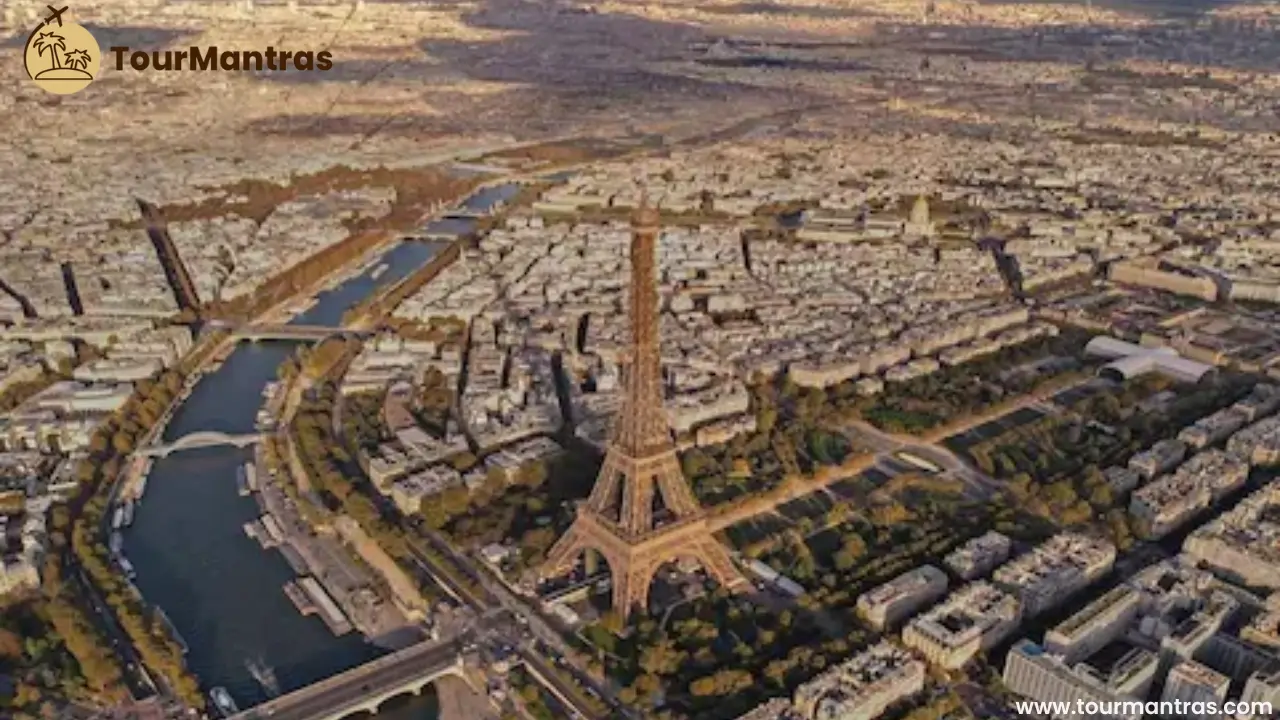
France ruins you. That is the honest warning nobody puts in the guidebooks.
You arrive with reasonable expectations — the Eiffel Tower at dusk, a croissant somewhere, maybe some wine — and you leave with the nagging sense that a week was not nearly enough and that you will almost certainly be back. No other country in Europe manages to be simultaneously world-famous and persistently surprising. Paris is not what you imagined. Normandy is not what you imagined. Even the Champagne region, which you expected to be about the sparkling wine and nothing else, turns out to have centuries of architecture, underground chalk cellars, and a cathedral that stops you in the middle of a sentence.
This 7-Day France Itinerary is built for travellers who want more than a Parisian highlight reel. The route covers Paris and its surroundings, swings east to the Champagne country, drops south to the French Riviera and Provence, then comes back north through Lyon before returning to the capital. Seven days is the minimum to do this journey justice. It is also, with the right planning, exactly enough.
Whether you are pulling together a France itinerary 1 week plan for the first time or need a France travel itinerary that goes beyond Paris, this guide covers every day in detail — routes, costs, food, visas, and a bonus 10-day France itinerary for those with a little more time. Consider it the only complete guide to the best 7 day France itinerary for first-time visitors you will need.
7-Day France Itinerary at a Glance
- Starting Point: Paris (Charles de Gaulle Airport or Orly Airport)
- Route: Paris → Giverny or Mont-Saint-Michel → Champagne (Reims/Épernay) → Nice → Aix-en-Provence → Lyon → Paris
- Ideal Duration: 7 days (see bonus 10 day France itinerary below)
- Travel Style: City exploration, art, history, gastronomy, and coastal scenery
- Best Time to Visit: April to June (spring) and September to October (autumn)
- Best Places to Visit in France on This Route: Paris, Mont St-Michel, Reims, Nice, Aix-en-Provence, Lyon
- Famous Destinations in France Covered: Eiffel Tower, Seine River, Giverny, Mont St-Michel, Promenade des Anglais, Vieux Nice, Lyon Old Town
- Best Tourist Spots in France: Paris (Days 1 and 7), French Riviera (Day 4), Champagne country (Day 3), and Lyon’s gastronomic quarter (Day 6)
- Average Daily Cost: INR 5,400–INR 31,500 per person (approx. USD 65–378) depending on travel style
- Best For: First-time visitors, couples, foodies, history lovers, art enthusiasts, and solo travellers
- Nearest Airports: Charles de Gaulle (CDG) and Orly (ORY) for Paris; Nice Côte d’Azur (NCE) for the Riviera
- Travel Tip: The SNCF rail network connects all destinations on this French travel itinerary efficiently. Book TGV (high-speed train) tickets at least 3–4 weeks in advance for the lowest fares. A Paris Visite travel card covers unlimited metro, bus, and RER travel within the Paris zone.
Price Disclaimer: All costs mentioned in this 7-Day France Itinerary are approximate estimates based on 2025 exchange rates (1 EUR ≈ INR 90 / USD 1.08) and are subject to change based on season, operator, availability, and individual preferences. Paris is typically 20–30% more expensive than other French regions. Always confirm current rates with airlines, hotels, and operators before booking.
About France — The Country Behind the Itinerary
France is the most visited country in the world — approximately 100 million international visitors per year, a figure that has held for most of the past two decades. That tells you something about the pull. But what the number obscures is how varied the country actually is.
Geographically, France spans the Atlantic coastline, Mediterranean beaches, Alpine peaks, Pyrenean ridges, river-valley wine country, and semi-arid lavender plateaus — all within a single national boundary. Historically, it has been the seat of Gothic cathedral architecture, Impressionist painting, existentialist philosophy, haute cuisine, and modern democracy. The Revolution of 1789 — which decapitated a king, established the rights of man, and eventually exported both ideas and chaos across Europe — remains the defining national story, visible in every government building and public square from Paris to Marseille.
For travellers, this layered richness is both the gift and the complication. The best places in France to visit depend on what you want: art, architecture, wine, coast, mountains, history, or food. Fortunately, this France travel itinerary covers a meaningful cross-section of all of them.
Day-by-Day: 7-Day France Itinerary
Your week in France begins in Paris. And, it includes day visits to Normandy and Champagne, eliminating the need to change hotels every day. This also provides you with a base in the capital from which to enjoy all of its attractions. We then go south to the French Riviera and Provence before returning north to Lyon. Return to the French capital on your last day to complete your vacation.
Day 1: Paris — Arrival and First Impressions
Welcome to France! Paris is the right place to open a one-week itinerary in France because it is simultaneously manageable and inexhaustible. The Métro reaches every corner of the city; the city itself is walkable between neighbourhoods; and within 24 hours, most travellers have already revised their opinion of the place several times.
Fly into Charles de Gaulle or Orly; the RER B line connects CDG to central Paris in approximately 35 minutes. Check into your hotel, change clothes, and resist the temptation to do too much on arrival day.
Seine River Cruise
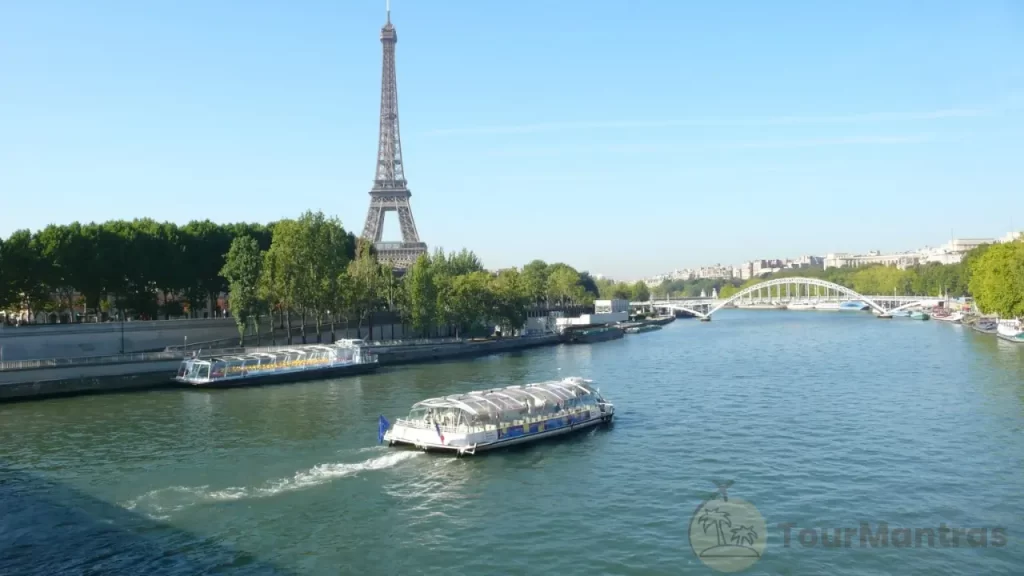
A sightseeing cruise down the Seine River is the ideal first-day activity for any France itinerary — it provides a visual introduction to the city’s most famous landmarks without the walking. Bateaux Mouches, Bateaux Parisiens, and Vedettes de Paris all operate river cruises from multiple departure points; a standard 1-hour cruise costs approximately EUR 17 (INR 1,530 / USD 18.30). On a clear evening, the cruise in the golden-hour light of Paris is one of the best travel spots in France for photography.
Latin Quarter (Quartier Latin)
One of the oldest and most atmospheric neighbourhoods in Paris, the Latin Quarter has been a centre of intellectual life since the medieval period — the University of Paris (founded 1150) was based here. Walk at a leisurely pace through the narrow streets, explore the bookshops along Rue de la Hûchette, have coffee at a pavement café, and let the neighbourhood set your pace. The Panthéon — the neoclassical mausoleum containing the remains of Voltaire, Rousseau, Victor Hugo, Marie Curie, and others — is at the top of the hill and worth a brief visit (EUR 13 / INR 1,170 / USD 14).
Eiffel Tower
No 7-Day France Itinerary begins without at least viewing the Eiffel Tower, even if a full summit visit is saved for later. The best free view is from the Trocadéro esplanade across the river. If you want to ascend, book skip-the-line tickets in advance — the queue without them can reach 3 hours. Summit tickets: EUR 29.40 (INR 2,646 / USD 31.80) per adult.
End Day 1 with dinner in a traditional Parisian bistro. Order the prix-fixe menu (three courses at a fixed price — typically EUR 20–35 / INR 1,800–3,150 / USD 21.60–37.80); it represents the best value eating in the city.
Day 2: Giverny or Mont St-Michel — One Day, Two Choices
The two activities are either a visit to Monet’s Gardens at Giverny or a guided bus excursion to Mont-Saint-Michel. We advise considering this, as you only have one day to take in the attractions of Normandy. While Mont St-Michel is fantastic all year round, Giverny is best in the spring and early summer.
You may also like to read, 11 Tourist Attractions In Eastern France You Should Visit Now
Option A: Giverny — Monet’s Garden
Located on the outskirts of Normandy and just over an hour from Paris by train to Vernon, followed by a short shuttle bus, Giverny has been the home of French Impressionist artist Claude Monet from 1883 until he died in 1926. He designed the Japanese-style gardens here himself — the water lily pond, the green Japanese bridge, the flower-filled alleys — and spent 30 years painting them. His renowned “Waterlilies” series was painted from the bridge over the pond.
Arrive around late morning to appreciate the garden light. Walk through the grounds, explore Monet’s house (the yellow dining room and his art collection of Japanese prints are remarkable), and have lunch at one of the village’s small restaurants. The gardens are most spectacular from April to October; outside this window, the visit is considerably less rewarding.
Option B: Mont St-Michel — The Tidal Island Monastery
Mont St-Michel is one of the most visited destinations in France — a Gothic abbey perched on a rocky tidal island in the bay between Normandy and Brittany, accessible by a causeway that disappears at high tide. A UNESCO World Heritage Site, the monastery dates from the 8th century, with the current Gothic spire completed in 1879. The tidal phenomenon surrounding it — the highest tides in continental Europe, reaching 14 metres — makes it genuinely dramatic.
Day trips from Paris are available by coach or train (approximately 3.5–4 hours each way); operators such as Viator offer guided tours with return transportation. Budget for a full day; the village within the island walls, the cloister, and the abbey church each need time.
Day 3 of Your France Itinerary: Trip to Champagne
Board a train from Paris Gare de l’Est — cheap services run almost every hour — and head east to France’s Champagne region for the third day of the France itinerary.
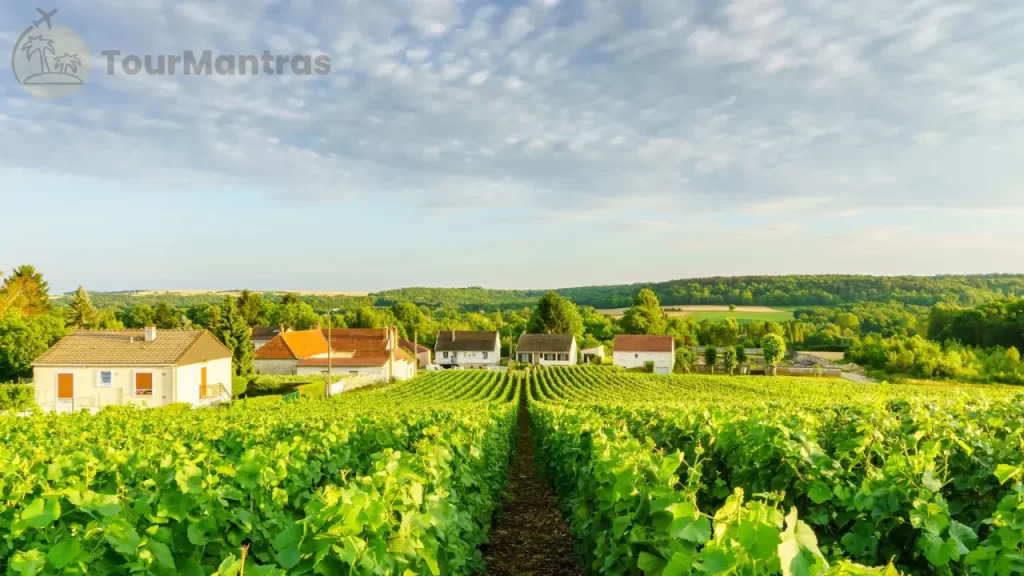
Champagne is most recognised for its sparkling wine, but it earns its place in any France itinerary 7 days plan for architecture and history as much as for the vineyards. Reims and Épernay together form the circuit.
Reims
Notre-Dame Cathedral, Reims
Reims’s Gothic Notre-Dame Cathedral is where 25 French kings were crowned between 1027 and 1825 — including Charles VII, with Joan of Arc standing beside him in 1429. The cathedral’s three great western portals are covered with more than 2,300 carved figures. UNESCO designated it a World Heritage Site in 1991. Entry is free; the tower climb requires a ticket.
Les Crayères (Chalk Quarries)
Beneath Reims stretches an extraordinary network of chalk quarries — some dating back to the Roman period — repurposed as wine cellars by the major champagne houses. Taittinger, Veuve Clicquot, and several other famous producers give tours of their underground cellars, followed by a tasting. Book in advance; the Taittinger cellars (INR 1,800–2,700 / USD 21.60–32.40 per person for a tour with tasting) are particularly impressive.
Épernay
Épernay is the commercial heart of the champagne industry. The Avenue de Champagne — a single tree-lined street — is home to the headquarters of Moët & Chandon (including Dom Pérignon), Mercier, Pol Roger, and others. Mercier offers an unusual underground train tour of its 18-km cellar network. It is impossible to explore everything in a single day, so concentrate on one or two houses and a walking tour of the town.
After admiring the magnificent Notre-Dame Cathedral in Reims, make sure to explore les crayeres, a vast network of chalk quarries that partially serve as cellars for several wine manufacturers. They were designated a UNESCO World Heritage Site because of their historical significance.
Day 4: Nice — The French Riviera
Travel to the south of France to discover a distinct side of France’s Itinerary.
Travel by direct flight from Paris to Nice (approximately 1.5 hours; fares from EUR 50 / INR 4,500 / USD 54 booked in advance) or by TGV train from Paris Gare de Lyon to Nice (approximately 5.5 hours; fares from EUR 30 / INR 2,700 / USD 32 booked early). Nice is among the most famous tourist places in France and the gateway to the French Riviera.
Promenade des Anglais
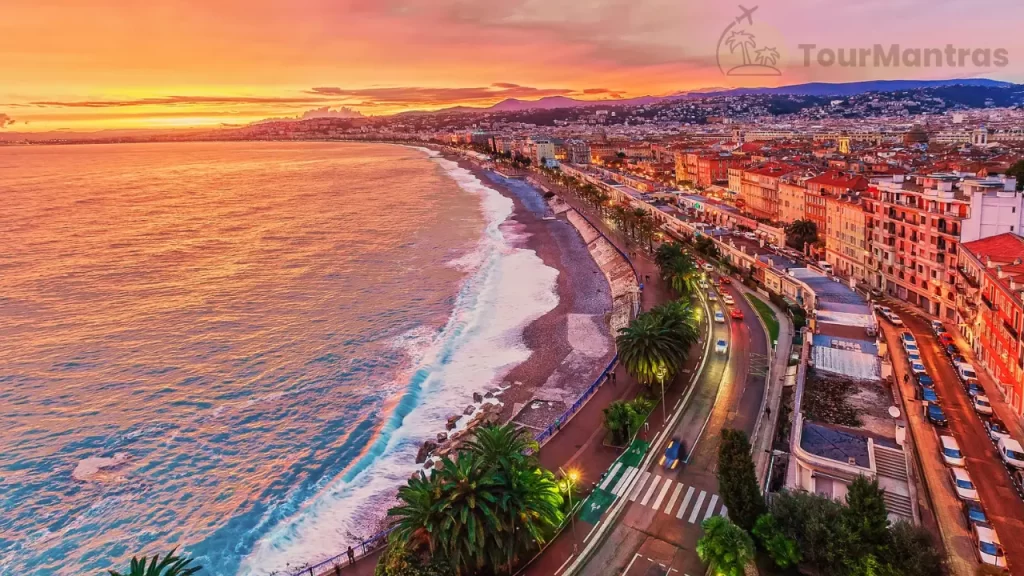
Nice’s defining feature is the Promenade des Anglais — a 7-km seafront boardwalk that runs along the coast from the Old Town to the airport, lined with 18th-century Belle Époque architecture, including the iconic Le Negresco hotel (opened 1913). The broad footway in front of the pebble beach is the place for an evening stroll, a morning run, or sitting with a glass of rosé watching the Mediterranean turn orange at sunset.
Vieux Nice (Old Town)
Nice’s Old Town is built in the Italian Baroque style — narrow cobblestone alleys, ochre-painted facades, wrought-iron balconies, and the smell of socca (chickpea flour pancake) from street vendors. The Opéra de Nice, the flower market at Cours Saleya, the 17th-century Place Rossetti, and dozens of independent shops selling Provençal soaps, lavender, and olive oil are all within walking distance of each other.
Colline du Château (Castle Hill)
At the eastern end of the Promenade des Anglais, climb the steps or take the free Art Deco lift to Castle Hill — the former site of Nice’s original medieval fortress, demolished in 1706. The views from the top over Vieux Nice, the Baie des Anges (Bay of Angels), and the Promenade des Anglais are among the finest free views in France.
For dinner, try Nice’s traditional cuisine: Salade Niçoise (with tuna, olives, anchovies, and hard-boiled eggs), Bouillabaisse (Provençal fish stew), and Pissaladière (onion tart with anchovies).
You may also check our blog on 21 Best Tourist Spots in France – Charming Places to Visit in France
Day 5: Aix-en-Provence — Cézanne Country
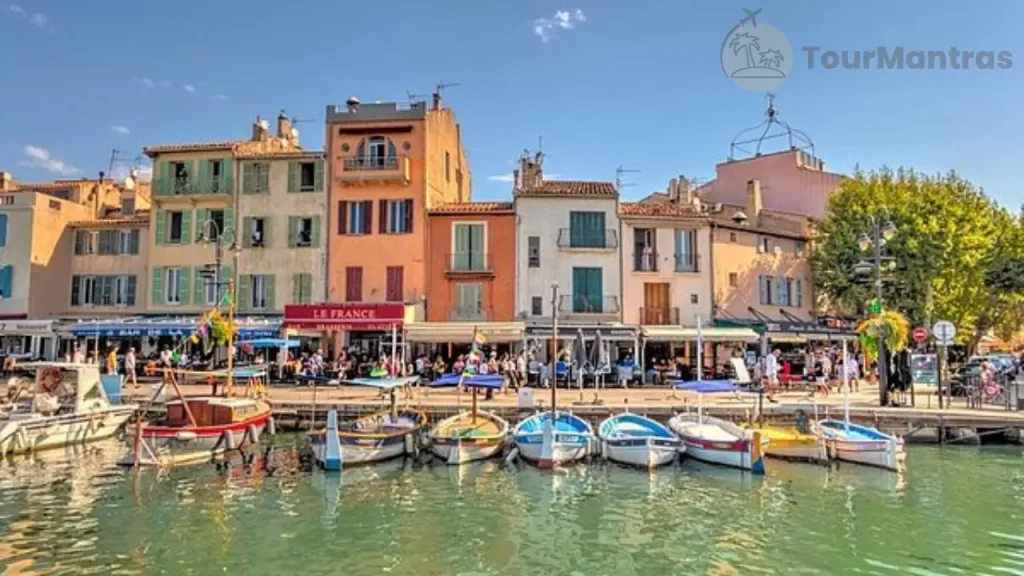
The train from Nice to Aix-en-Provence takes approximately 3.5 hours via Marseille; book an early departure to maximise time. Aix is one of those nice places in France to visit that consistently surprises visitors who arrive expecting a secondary stop.
The Cézanne Trail
Post-Impressionist painter Paul Cézanne was born in Aix in 1839 and spent much of his life here, painting the surrounding landscape — particularly Mont Sainte-Victoire — in dozens of interpretations of its shifting light and form. The Cézanne Trail is a self-guided walking route through the town’s historic centre, connecting plaques and sites associated with the painter. It is the finest introduction to the city for arts-oriented visitors. Cézanne’s studio (Atelier Cézanne) on the northern edge of town is open for visits (EUR 9 / INR 810 / USD 9.70).
Place Richelme
Place Richelme is Aix’s beloved daily food market — a traditional outdoor market in the town’s cherished market square, selling local fruit, vegetables, olives, cheeses, and flowers every morning. The light on the warm stone buildings of the square, filtered through the plane trees, is the quintessential Provençal scene. Arrive before noon.
La Rotonde Fountain
The 19th-century La Rotonde fountain at the foot of the Cours Mirabeau — Aix’s grand central boulevard lined with plane trees and cafés — is the natural gathering point of the city and the best starting point for exploring on foot.
Day 6: Lyon — Capital of French Gastronomy
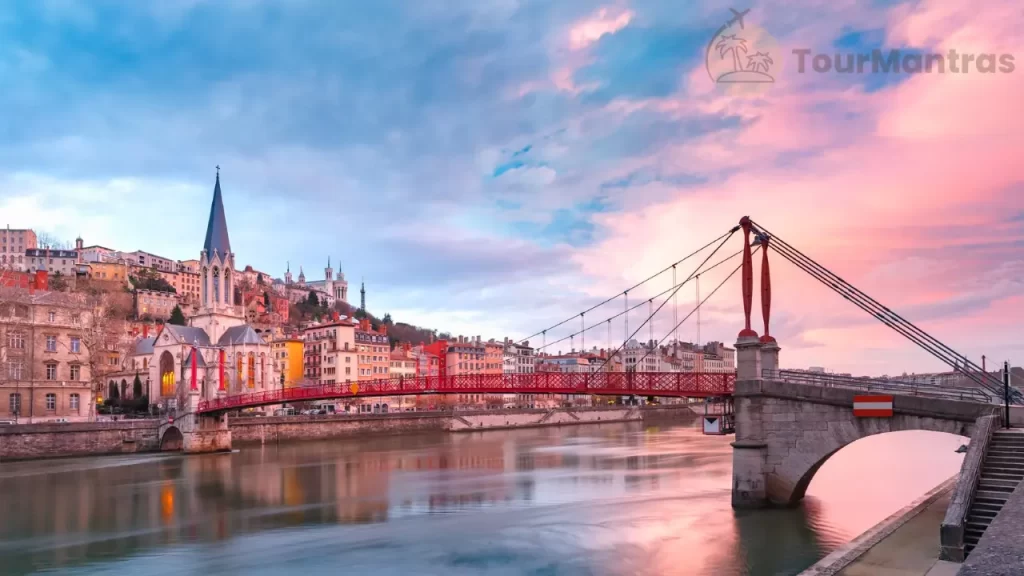
Board the train from Aix-en-Provence (via Marseille) to Lyon — approximately 2 hours by TGV. Lyon is one of France’s most important cities in terms of both population and cultural heritage, located in the Rhône Valley at the confluence of the Saône and Rhône rivers. It was the Roman capital of Gaul (Lugdunum), established in 43 BC. It is also, by wide agreement, the best city in France for food.
Vieux Lyon (Old Town)
Vieux Lyon is a UNESCO World Heritage Site — a remarkably intact Renaissance neighbourhood along the western bank of the Saône, with buildings dating from the 15th to 17th centuries. The most distinctive architectural feature is the traboule — a covered passageway running through building blocks, used historically by silk workers to transport fabric without damage from the rain. Over 40 traboules survive in Vieux Lyon and are open to the public during daylight hours.
Cathédrale Saint-Jean-Baptiste
The St-Jean Cathedral, begun in the 12th century and completed in the 15th, has an extraordinary astronomical clock in the north transept — a medieval machine that accurately shows the position of the sun, moon, and stars and continues to function.
Museum of Gallo-Roman Civilisation
On the Fourvière hill above Vieux Lyon, the Museum of Gallo-Roman Civilisation (Musée Gallo-Romain de Fourvière) sits alongside two well-preserved Roman theatres — one dating from 15 BC, one of the oldest in France. The views of Lyon from here are extraordinary. Entry: EUR 8 (INR 720 / USD 8.60).
Bouchon Lyonnais
A bouchon is Lyon’s traditional restaurant format — small, informal, and focused on regional cuisine: quenelles de brochet (pike dumplings in sauce), andouillette sausage, Saint-Marcellin cheese, and the wines of Beaujolais and Côtes du Rhône. Paul Bocuse, widely regarded as the father of modern French gastronomy, called Lyon home. A meal at a genuine bouchon is one of the cool things to do in France that also happens to be a genuinely meaningful experience.
You may also like to read, 11 Tourist Attractions in Southern France to Explore Your Holidays
Day 7: Return Back to Paris
Travel from Lyon to Paris by TGV from Lyon Part-Dieu station — approximately 2 hours to Paris Gare de Lyon. The train arrives in central Paris in time for a full afternoon.
Le Train Bleu Restaurant
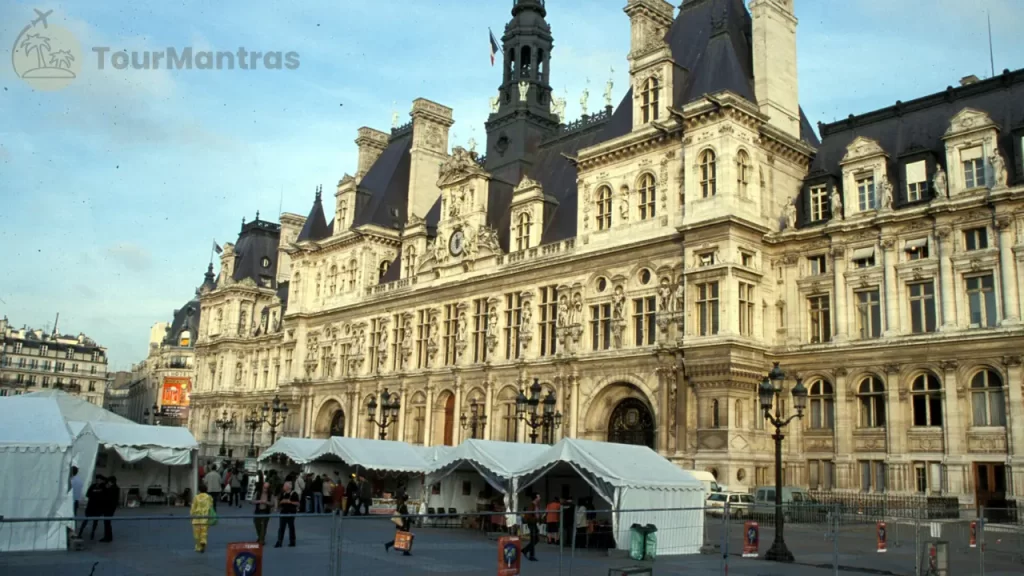
Le Train Bleu, located on the second floor of the Gare de Lyon station, was opened in 1901 for the World Exhibition and has been operating continuously ever since. Its interior — gilded ceilings, painted panels, crystal chandeliers, and velvet banquettes — is listed as a historic monument. A classic Parisian lunch here, on the day you arrive back by train, is one of those experiences that sounds touristy and turns out to be genuinely spectacular.
Marais District (Le Marais)
The Marais is one of Paris’s finest and most architecturally intact historic neighbourhoods — a dense concentration of Renaissance hôtels particuliers (private mansions), Jewish heritage, contemporary galleries, and some of the best independent boutiques in the city. The Place des Vosges (built 1612) is the oldest planned square in Paris; Victor Hugo lived at No. 6, and his apartment is open as a museum (free entry).
Pont Marie and Île Saint-Louis
At sunset, walk south from the Marais to the Seine and cross the Pont Marie — one of the city’s oldest bridges (1635) — to Île Saint-Louis. The island has been largely unchanged since the 17th century: one main street, a handful of restaurants, and the creamery Berthillon (the most celebrated ice cream in Paris). Watching the lights of Paris come up from the eastern tip of Île Saint-Louis is the appropriate ending to a 7-Day France Itinerary.
Best Places Covered in This France Travel Itinerary
A summary of the best destinations in France covered across this 7-day route:
- Paris (Days 1 and 7): Seine River, Latin Quarter, Eiffel Tower, Marais, Île Saint-Louis
- Giverny or Mont St-Michel (Day 2): Monet’s gardens or the tidal island monastery
- Reims and Épernay (Day 3): Gothic cathedral, chalk cellar tours, champagne tastings
- Nice (Day 4): Promenade des Anglais, Vieux Nice, Castle Hill
- Aix-en-Provence (Day 5): Cézanne Trail, Place Richelme market
- Lyon (Day 6): Vieux Lyon traboules, bouchon cuisine, Roman theatres
Food in France — What to Eat and Where
A France travel itinerary without food guidance is incomplete. France invented the modern restaurant (the word itself is French, from 1765), and eating well here is not optional — it is the experience.
- Paris: Croissants and café au lait from a neighbourhood boulangerie at breakfast; Steak-Frites at a zinc-countered brasserie for lunch; Escargots de Bourgogne and Coq au Vin for dinner. The Marché d’Aligre (open Tuesday to Sunday) is the city’s best food market.
- Champagne Region: Biscuits Roses de Reims (pink biscuits traditionally dipped in champagne), andouillette sausage, and young red wines from the Côteaux Champenois appellation, alongside the obvious sparkling wine.
- Nice: Socca (chickpea pancake from street vendors), Salade Niçoise, Pissaladière (onion tart), Pan Bagnat (pressed sandwich), and Rosé wines from nearby Provence.
- Aix-en-Provence: Calissons d’Aix (almond and candied melon confections, specific to Aix), Tapenade (olive paste), and Navettes (orange blossom biscuits).
- Lyon: Quenelles de Brochet, Andouillette, Saint-Marcellin, Praline Tart (pink praline cream tart — a Lyon speciality), and the wines of Beaujolais.
France Ecotourism Market note: France has developed a substantial France ecotourism market over the past decade — agri-tourism and farm-to-table dining experiences are available across the country, particularly in Provence and the Loire Valley. For travellers interested in sustainable travel, vineyard stays, and organic farm visits, France’s certified écotourisme label properties are bookable through Bienvenue à la Ferme and Accueil Paysan networks.
How to Reach France
By Air
Paris Charles de Gaulle (CDG) is France’s primary international hub — the second-busiest airport in Europe after London Heathrow, with direct connections to over 180 countries. Orly (ORY) serves additional routes within Europe and North Africa. Nice Côte d’Azur (NCE) is the ideal arrival airport for travellers starting the 7-Day France Itinerary in the south.
From India: Air France, Air India, IndiGo (via hub connections), and Gulf carriers (Emirates, Qatar Airways, Etihad) operate regular services. Typical flight times: Mumbai–Paris CDG (9 hours direct); Delhi–Paris CDG (8.5 hours direct). Return fares from India to France: approximately INR 50,000–INR 1,00,000 (approx. USD 600–1,200) depending on season and booking lead time.
By Rail
France’s TGV (Train à Grande Vitesse) network is one of Europe’s finest. Paris to Lyon: 2 hours. Paris to Marseille: under 3.5 hours. Paris to Nice: 5.5 hours. Book via SNCF Connect or the Eurail France Pass (from EUR 198 / INR 17,820 / USD 214 for 3 days in a month) for significant savings on intercity travel.
By Road
Car hire in France starts from approximately INR 4,000 (USD 48) per day for a compact vehicle. Driving is the most flexible option for Day 2 excursions (Giverny, Mont St-Michel) and for exploring Provence or Champagne at your own pace. French motorways (autoroutes) are toll-operated; budget approximately EUR 10–30 (INR 900–2,700 / USD 10.80–32.40) per long journey in tolls.
Average Travel Cost in France (Per Person)
- Budget traveller (hostel, public transport, boulangerie meals, free museums): INR 5,400–INR 9,000 per day (approx. USD 65–108)
- Mid-range traveller (3-star hotel, TGV rail, restaurant meals): INR 13,500–INR 22,500 per day (approx. USD 162–270)
- Luxury traveller (boutique hotels, private tours, fine dining): INR 31,500+ per day (approx. USD 378+)
Estimated 7-Day Total (Excluding International Flights):
- Budget: INR 40,000–INR 65,000 (approx. USD 480–780)
- Mid-range: INR 1,00,000–INR 1,60,000 (approx. USD 1,200–1,920)
- Luxury: INR 2,50,000+ (approx. USD 3,000+)
France Travel Planner — Things to Do and Things to Avoid
A France travel itinerary needs a few practical notes that most guides skip.
- Museum Pass: The Paris Museum Pass (EUR 52 for 2 days / INR 4,680 / USD 56.20) covers the Louvre, Musée d’Orsay, Versailles, and over 50 other attractions with no queuing. It pays for itself by Day 2.
- Tipping: France does not have a strong tipping culture — service is included in the bill (service compris). Leaving EUR 1–2 per person for good service is appreciated but not obligatory.
- Sunday Trading: Many food markets, bakeries, and some restaurants are closed on Monday; Sunday trading is more active than in Germany. Plan accordingly.
- Cool Things to Do in France That Nobody Tells You: Take a Vélib’ (Paris’s electric bike hire scheme) across the city at dawn, when the streets are quiet. Attend a Sunday morning antiques market at Saint-Ouen (the largest flea market in the world). Order the prix-fixe lunch menu at a Michelin-starred restaurant — significantly cheaper than dinner at the same table.
- Crazy Things to Do in France (for the Adventurous): Paraglide above Annecy’s alpine lake (one of Europe’s finest paragliding sites), cave kayak through the underground river at the Grotte de la Clamouse, or cycle the entire Loire à Vélo trail (800 km through the Loire Valley, bookable as a self-guided multi-day itinerary).
- Best Towns in Northern France: Honfleur (a perfectly preserved fishing harbour in Normandy), Bayeux (famous for its embroidered medieval tapestry), Épernay (the champagne capital), and Amiens (home to France’s tallest Gothic cathedral) are among the best towns in northern France for visitors who want the country’s history without Paris’s crowds.
- Best Tourist Spots in France for Families: Disneyland Paris (45 minutes from central Paris by RER), the Futuroscope theme park near Poitiers, and the Puy du Fou historical theme park in the Vendée (widely regarded as the world’s finest historical theme park) are the top family destinations.
Things to Avoid in France
- Visiting Major Attractions Without Pre-Booked Tickets: The Eiffel Tower, the Louvre, Versailles, and Mont St-Michel all have timed-entry booking systems. Walk-up queues without a ticket can reach 2–3 hours in peak season. Book online at least 2–3 weeks in advance.
- Skipping Train Ticket Validation: On regional SNCF trains and Paris Métro lines, you must validate (composter) your ticket before boarding. Travelling without a validated ticket — even if you have paid — carries an on-the-spot fine of EUR 50–100 (INR 4,500–9,000 / USD 54–108).
- Renting a Car in Paris: Entirely unnecessary and expensive. Parking is scarce, congestion is heavy, and the Métro reaches every destination on Day 1 and Day 7. Hire a car only for Day 2 excursions (Giverny, Mont St-Michel) or for regional touring in the Loire Valley and Provence.
- Addressing Service Staff Without a Greeting: In France, beginning any interaction — whether in a shop, café, or restaurant — without “Bonjour Monsieur/Madame” is considered rude. The same applies at market stalls, hotel receptions, and ticket counters. It is a cultural norm, not a suggestion.
- Assuming Cash Will Always Work: Paris is increasingly card-dominated — many boulangeries, galleries, and museums are now card-only. Outside Paris, particularly at rural markets and village restaurants, cash remains expected. Carry both.
- Booking Paris Restaurants Without Reservations: Good Parisian bistros and brasseries fill quickly, particularly Thursday to Saturday evenings. A restaurant that appears to have tables available at 7:30 PM is often fully booked. Reserve by phone or OpenTable at least 2–3 days in advance.
- Ordering a Coffee “To Go” in a Traditional Café: French café culture is not designed for takeaway. Ordering a coffee and leaving immediately is acceptable but unusual; sitting down, paying table service prices, and staying for 20 minutes is the social norm. If you want fast coffee, use a chain.
- Visiting France in August Without Forward Planning: August is when most Parisians leave the city for the coast or countryside. Many neighbourhood restaurants, bakeries, and independent shops close for 2–3 weeks. If you visit in August, plan around closures and book accommodation and restaurant reservations well in advance.
You may also read a detailed blog on things to avoid in France.
France Visa Requirements
Do Indian Citizens Need a Visa for France?
Yes. Indian passport holders require a Schengen Visa to visit France. France is a member of the Schengen Area, which covers 27 European countries — a single Schengen visa allows entry into all member states.
- Visa Type: Short-Stay Schengen Visa (Type C)
- Processing Time: 15 working days on average; apply at least 3–4 weeks before travel
- Visa Fee: EUR 80 (approx. INR 7,200 / USD 87) for adults; EUR 40 (INR 3,600 / USD 43) for children aged 6–12
- Validity: Up to 90 days within 180 days
- Where to Apply: VFS Global centres across India (Delhi, Mumbai, Bangalore, Chennai, Hyderabad, Kolkata, Ahmedabad, Pune, Chandigarh, Jaipur, Lucknow, Kochi)
Documents Required for Indian Citizens
- Valid passport (minimum 6 months’ validity beyond intended stay; at least 2 blank pages)
- Completed Schengen visa application form (available at VFS Global France)
- Two recent passport-size photographs (35mm × 45mm, white background)
- Confirmed hotel bookings for the full duration of stay
- Confirmed return flight itinerary
- Travel insurance covering the entire Schengen zone (minimum EUR 30,000 / INR 27,00,000 / USD 32,400 coverage)
- Bank statements for the last 3 months (showing funds of approximately EUR 65 per day of travel — France’s recommended daily budget per visitor)
- Income tax returns for the last 2 financial years
- Employment letter stating position, salary, and approved leave dates
- Leave a sanction letter from the employer
- No-Objection Certificate (NOC) — required for students and minors
Visa Requirements for International Travellers
| Nationality | Visa Required? | Notes |
|---|---|---|
| EU / EEA Citizens | No | Freedom of movement within the EU |
| US Citizens | No (ETIAS from 2025) | Up to 90 days visa-free; ETIAS authorisation required from mid-2025 |
| UK Citizens | No (post-Brexit) | Up to 90 days within 180 days |
| Canadian Citizens | No (ETIAS from 2025) | Up to 90 days visa-free |
| Australian Citizens | No (ETIAS from 2025) | Up to 90 days visa-free |
| New Zealand Citizens | No (ETIAS from 2025) | Up to 90 days visa-free |
| Chinese Citizens | Schengen Visa Required | Apply through French Embassy or VFS Global |
| Pakistani Citizens | Schengen Visa Required | Allow additional processing time |
| Bangladeshi Citizens | Schengen Visa Required | Apply at French Embassy in Dhaka |
| South African Citizens | Schengen Visa Required | Apply through VFS Global South Africa |
Note on ETIAS: The European Travel Information and Authorisation System — similar to the US ESTA — is expected to launch for visa-exempt non-EU visitors from mid-2025. Cost: EUR 7 (approx. INR 630 / USD 7.60). Valid for 3 years or until passport expiry.
Best Time to Visit France
- April to June (Spring): Paris in bloom, lavender beginning in Provence, mild temperatures, and smaller crowds than summer. The best season overall for a France itinerary 1 week plan.
- September to October (Autumn): Grape harvest season across Champagne, Bordeaux, and Burgundy. Warm Mediterranean temperatures in the south; golden light in Paris. The finest overall month is October — warm enough for outdoor dining, cool enough for walking.
- December (Winter): Christmas markets along the Alsace Route des Vins (Strasbourg’s is the oldest in France, dating from 1570), reduced hotel rates in most regions outside Paris, and the rare pleasure of Nice’s Old Town without summer crowds.
- July to August (Peak Summer): Warmest and most crowded. Book flights, trains, and accommodation 3–4 months in advance. The Riviera is at its most glamorous and most expensive.
Bonus: 10-Day France Itinerary
How many days are enough for a France itinerary? Seven days cover the core circuit well. Ten days allow the country to breathe and add two regions that the 7-day route misses.
Days 1–7: Follow the 7-Day France Itinerary above (Paris → Giverny or Mont St-Michel → Champagne → Nice → Aix-en-Provence → Lyon → Paris).
Day 8: The Loire Valley — Château Country
Take the TGV from Paris Gare Montparnasse to Tours (approximately 1 hour). The Loire Valley holds the largest concentration of Renaissance châteaux in Europe — the French court relocated here from Paris in the 15th century, and the royals and nobles proceeded to build extraordinary palaces.
- Château de Chambord: François I’s hunting lodge — built from 1519, with a double-helix staircase (attributed to Leonardo da Vinci in the original design) and 440 rooms. UNESCO World Heritage Site.
- Château de Chenonceau: Built across the River Cher, with a gallery spanning the water; associated with Catherine de Medici and Diane de Poitiers. Frequently cited as the most visited château in France after Versailles. A hire car from Tours is strongly recommended for the Loire Valley; the châteaux are spread across 100 km of river valley and accessible from the N152 road along the riverbank.
Day 9: Bordeaux — The Wine Capital
Take the TGV from Paris to Bordeaux (approximately 2 hours — one of the fastest rail connections in France). Bordeaux is the undisputed wine capital of the world and one of the finest cities in France architecturally — much of its 18th-century centre is UNESCO-listed.
- Place de la Bourse: The elegant 18th-century square facing the Garonne River, reflected in the Miroir d’Eau (the world’s largest reflecting pool). A genuinely spectacular plaza.
- La Cité du Vin: The wine museum of Bordeaux — a remarkable building on the waterfront housing an interactive exploration of wine culture across 20 themed spaces. Entry: EUR 22 (INR 1,980 / USD 23.80).
- Médoc Wine Route: Day trips by bus or hire car to Pauillac (home of Château Mouton Rothschild, Château Latour, and Château Lafite Rothschild) are available; most major estates require advance appointment for visits.
Day 10: Departure Day
A final morning in Bordeaux before the 2-hour TGV back to Paris Charles de Gaulle for international departure — or fly directly from Bordeaux Mérignac Airport (BOD) for European connections.
This 10-day France itinerary covers the core best places to visit in France — Paris, the Champagne country, the French Riviera, Provence, Lyon, the Loire Valley, and Bordeaux — in a single coherent circuit with logical rail connections at each stage.
Wrapping Up on 7-Day France Itinerary
France is an absolute jewel. France is a country that draws you back time and time again because of its diversity in landscapes, cuisines, and even temperatures. We hope you will like this article on the 7-day France itinerary. Will you travel to France for seven days? What French location would you choose to be your favourite? Let us know in the comments below.
Frequently Asked Questions 7-Day France Itinerary
1) Are 5 days enough in France?
The France itinerary of 5 days is plenty to explore the French culture and engage with the friendly inhabitants. There are many things to do in France, and experiencing the euphoric mountains and hills is all you can do to make your visit more exciting.
2) What is the best month to visit France?
The best time to visit France is in Spring (April-May), Summer (June-August), and Autumn (September-October).
3) Is 1 week enough in France?
If you plan your time wisely, a week might be enough time to visit Paris and other notable locations in France. The world’s largest art museum, the Musée du Louvre, the Eiffel Tower, and Notre Dame are just a few of the prominent Paris landmarks to visit in a 7-day France Itinerary.
4) What is the cheapest month to go to France?
The best season to visit France is between April and June (spring) or September and November (autumn) when there are fewer visitors, reduced prices, and pleasant weather.
5) Is Lyon worth visiting?
Lyon is a lovely French city to visit. You may enjoy wonderful dining, shopping, the Cathedral on the hill, and the Old Town with its beautiful views.
6) Is a 7-Day France Itinerary achievable by train without a car?
Largely yes. Paris, Nice (via TGV), Lyon (via TGV), and Aix-en-Provence (via Marseille) are all well connected by France’s rail network. The exceptions are Day 2 (Giverny requires a train to Vernon plus a shuttle bus; Mont St-Michel is most practical by coach tour) and any exploration of the Loire Valley or Bordeaux wine country, which rewards a hire car.
7) What are the best places to visit in France for first-time visitors?
The best places to visit France has to offer for first-time visitors span Paris, the Champagne region, the French Riviera, Aix-en-Provence, and Lyon. These are the core destinations in France to visit on any strong one week in France itinerary. Nice is a particularly nice place to visit in France for those wanting a Mediterranean city with an old town, pebble beaches, and easy access to Monaco — all from a single base. The best 7 day France itinerary for first-time visitors combines all of these in one coherent route. For a second trip, add Provence’s hilltop villages (Gordes, Roussillon), the Loire Valley châteaux, and the Alsace wine route.
8) What are the best tourist places in France for families?
Disneyland Paris (Marne-la-Vallée, 45 minutes from central Paris by RER), Puy du Fou (Vendée), Futuroscope (Poitiers), the Château de Chambord (Loire Valley), and Nice’s beaches all rank consistently as the best tourist spots in France for families. Most are reachable within this France travel itinerary with minor adjustments.
9) What are the famous destinations in France that most travellers miss?
Beyond the usual famous places in France to visit, the most rewarding underrated destinations include Honfleur (Normandy), Colmar (Alsace), the Dordogne Valley, Carcassonne (a fully intact medieval walled city), and the Camargue wetlands (flamingos, white horses, and salt pans in the Rhône delta). None of these appears on the standard one week in France itinerary, which makes them genuinely worthwhile to add.
10) What are cool things and crazy things to do in France?
Cool things to do in France include wine tasting in a 2,000-year-old chalk cave in Reims, cycling along the Loire à Vélo trail, eating at a Michelin-starred restaurant for lunch at half the dinner price, and watching a boules match in a Provençal village square on a Sunday morning. Crazy things to do in France include cliff jumping at the Calanques near Marseille, paragliding above Annecy, and attempting the GR20 — the most demanding long-distance trail in Europe, across the Corsican mountains.
11) What are the best towns in northern France to visit?
The best towns in northern France include Honfleur (for the harbour and the light that attracted the Impressionists), Bayeux (for the medieval tapestry and as a base for the Normandy D-Day beaches), Reims (for the cathedral and the champagne cellars), Amiens (for the tallest Gothic cathedral in France), and Rouen (where Joan of Arc was burned at the stake in 1431 — a city of extraordinary medieval character largely ignored by international tourism).
12) Is France suitable for solo travellers from India?
France is consistently rated among the most solo-traveller-friendly countries in Europe. The major cities have excellent public transport; English is widely spoken in tourist areas; and the train network makes independent travel straightforward. Indian solo travellers should carry their Schengen visa documents at all times, keep digital copies of travel insurance and hotel bookings accessible offline, and have a basic familiarity with French courtesy phrases — a “Bonjour” at the start of every interaction makes a measurable difference to how you are received.
You may also like:
- 7 Days Germany Itinerary [2022]
- 10 Day Germany Itinerary for Tourists
- A Brief Guide on Ephesus Tour Plan From Pamukkale

The Chief Editor of TourMantras is a digital marketing professional, but also a travel enthusiast at the same time. He loves researching the latest tourist destinations in India or abroad and visiting them in person when possible. After that, he loves posting them on our website just to satisfy his passion and provide accurate information to travellers.