Planning an Antarctica trip from your country is different from planning an ordinary international holiday. You cannot simply book a commercial flight to an Antarctic city, check into a hotel and start sightseeing.
Most leisure travellers first reach one of a handful of Antarctic gateway cities. For Antarctic Peninsula trips, Ushuaia in Argentina and Punta Arenas in Chile are the main gateways. Travellers considering East Antarctica or the Ross Sea may instead use Hobart in Australia or Christchurch in New Zealand, while Cape Town has specialised links towards Antarctica.
Where you start—from India, the USA, Europe, Africa or Australia—changes your flight plan, total budget, currency, entry requirements and the amount of buffer time you should allow.
This guide explains:
- Which Antarctic gateway suits each region
- How different routes work
- What an Antarctica trip can cost
- Cruise vs fly-cruise options
- Visa and insurance considerations
- How much time you should allow
Antarctica Travel at a Glance
| Question | Quick Answer |
|---|---|
| Main Peninsula gateway | Ushuaia, Argentina |
| Main fly-cruise gateway | Punta Arenas, Chile |
| East Antarctica gateway | Hobart, Australia |
| Ross Sea gateway | Christchurch/New Zealand ports |
| Specialised African gateway | Cape Town, South Africa |
| Main travel season | November to March |
| Typical Peninsula expedition | Around 10–13 days |
| Fly-cruise option | Around 6–10 days |
| Ross Sea voyages | Often 3–4 weeks |
| Antarctica visa | No separate Antarctica visa, but gateway-country rules apply |
| Typical expedition fare | Roughly US$7,000 to US$20,000+ for many Peninsula options |
Cruise prices vary significantly by date, cabin, ship, itinerary and promotion.
How Do You Actually Travel to Antarctica?
For most tourists, the journey has three stages:
Home country → South America → Antarctic gateway → Antarctica
The most common route is:
Your country → Buenos Aires → Ushuaia → Drake Passage → Antarctic Peninsula
Another major route is:
Your country → Santiago → Punta Arenas → King George Island → Antarctic Peninsula
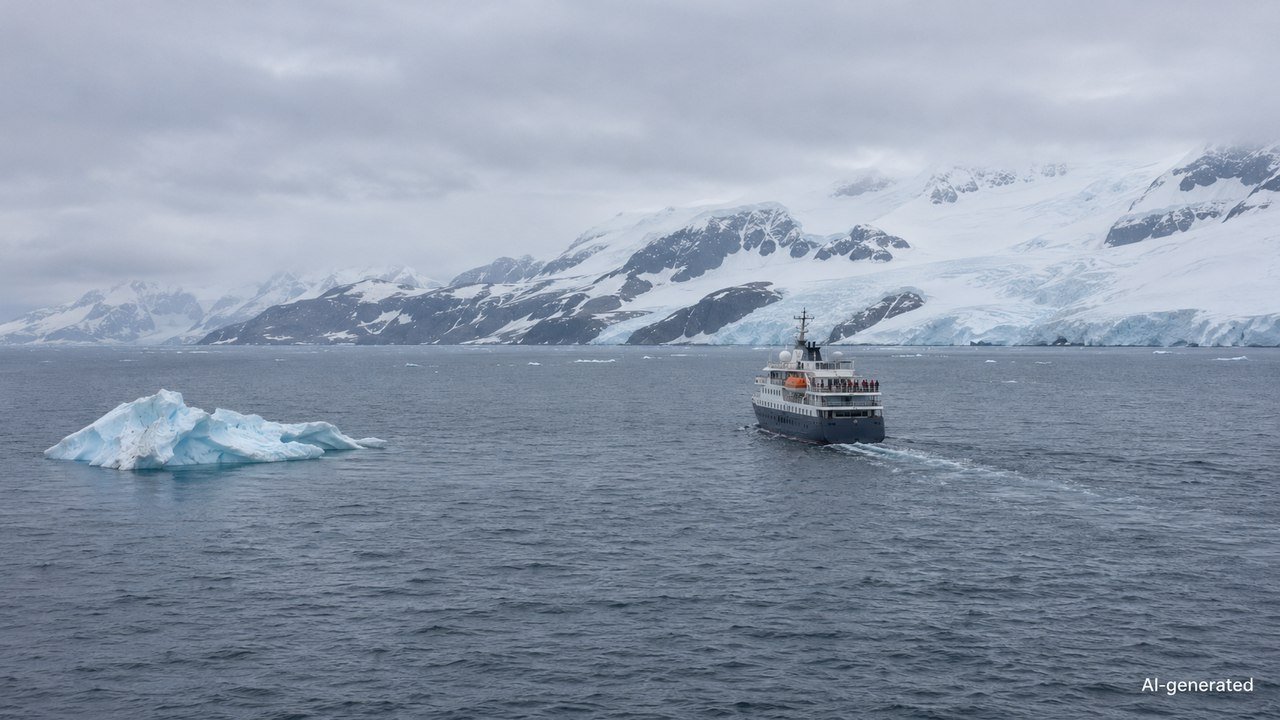
Ushuaia is currently the departure point for a large share of Antarctic expedition cruises. Ships sail through the Beagle Channel before crossing the Drake Passage towards the South Shetland Islands and Antarctic Peninsula.
Punta Arenas offers an important alternative: fly-cruise expeditions can use a roughly two-hour charter flight to King George Island, reducing or avoiding the traditional Drake Passage crossing by sea.
Which Antarctic Gateway Should You Choose?
There are five internationally recognised Antarctic gateway cities.
| Gateway | Country | Most Relevant For |
|---|---|---|
| Ushuaia | Argentina | Antarctic Peninsula cruises |
| Punta Arenas | Chile | Peninsula fly-cruises |
| Hobart | Australia | East Antarctica |
| Christchurch | New Zealand | Ross Sea and Antarctic logistics |
| Cape Town | South Africa | Specialised Antarctic air access |
For a first leisure trip, Ushuaia or Punta Arenas will usually be the most relevant.
Hobart, Christchurch and Cape Town become more important for travellers seeking specialised East Antarctic, Ross Sea or interior experiences rather than the classic Peninsula itinerary.
How Much Does an Antarctica Trip Cost?
A realistic Antarctica budget needs to include more than the cruise fare.
Current 2026–27 published expedition prices show why the range is wide. Some approximately 10–13-day Antarctic Peninsula voyages from Ushuaia list lower-category fares from roughly US$7,000–US$10,000 (about ₹6.6 lakh–₹9.4 lakh), while higher cabin categories and longer routes can cost considerably more.
Classic fly-cruises from Punta Arenas are significantly more expensive. Current 2026–27 listings commonly show prices around US$16,000–US$20,000+ per person (about ₹15 lakh–₹18.8 lakh+), depending on departure and accommodation.
Long Ross Sea expeditions can exceed US$30,000 (about ₹28.2 lakh) per person. A current 28-day 2027 Ross Sea voyage, for example, is listed from US$33,075, or approximately ₹31.1 lakh.
These INR figures are approximate and are based on an exchange rate of about ₹93.91 per US$1. Actual costs may vary with exchange rates, card or bank conversion charges, taxes and the payment date.
Your Total Antarctica Budget May Include
- International flights
- Domestic or regional flights to the gateway
- Expedition cruise
- Pre-cruise hotel
- Post-cruise buffer night
- Travel insurance
- Visa or transit costs where applicable
- Meals before and after the expedition
- Optional kayaking or other activities
- Cold-weather equipment not supplied by the operator
This is why two travellers booking the same cruise can have very different total trip costs depending on whether they begin in Buenos Aires, London, Mumbai or Sydney.
Antarctica Trip from North America
Travellers from the USA or Canada will usually need to position themselves in South America before joining an Antarctic expedition.
Two practical route patterns are:
USA/Canada → Buenos Aires → Ushuaia → Antarctica
or
USA/Canada → Santiago → Punta Arenas → Antarctica
Ushuaia makes sense for travellers who want the classic expedition cruise and Drake Passage experience.
Punta Arenas is particularly relevant for travellers who want a fly-cruise and prefer to reduce their time crossing the Drake by ship.
When budgeting from North America, include international airfare plus the additional journey to Patagonia rather than looking only at the advertised cruise fare.
Antarctica Trip from South America
South American travellers have a geographical advantage because the two principal Peninsula gateways are already in Argentina and Chile.
For travellers beginning in Argentina, Buenos Aires and Ushuaia form a natural route.
For travellers beginning in Chile, Santiago and Punta Arenas provide a practical connection to Antarctic cruises and fly-cruises.
Visitors from Brazil and neighbouring South American countries can compare both routes based on airfare, cruise dates and whether they want a sea crossing or fly-cruise.
Antarctica Trip from Europe
Travellers from the UK, Germany, France, Spain, Italy and elsewhere in Europe commonly need to reach Argentina or Chile before continuing south.
A typical journey may look like:
Europe → Buenos Aires → Ushuaia → Antarctica
or
Europe → Santiago → Punta Arenas → Antarctica
Because the international journey is long, it is sensible to avoid arriving at the Antarctic gateway on the day your expedition begins.
Weather can affect Antarctic transport, particularly air-cruise programmes, and official Chilean tourism guidance recommends allowing additional time around Punta Arenas when planning onward flights.
European travellers should calculate the complete trip in their home currency rather than simply converting the cruise fare. International flights, Patagonia accommodation, insurance and currency movements can materially change the final budget.
Antarctica Trip from Asia
For travellers from India, Singapore, Malaysia, Japan, South Korea, the Philippines, UAE and other Asian countries, reaching the Antarctic Peninsula usually involves the longest positioning journey.
The broad route is:
Asia → major international connection → Buenos Aires/Santiago → Ushuaia/Punta Arenas → Antarctica
For Indian travellers, for example, the Antarctica cruise itself may take around 10–12 days, but the complete journey should allow additional days for long-haul flights, connections and a pre-expedition buffer.
This makes three factors particularly important when comparing packages:
- Whether international airfare is included
- Where the operator officially starts the itinerary
- Whether accommodation in Buenos Aires, Santiago, Ushuaia or Punta Arenas is included
A seemingly cheaper cruise may not produce the cheapest total Antarctica trip from Asia once positioning flights are added.
Antarctica Trip from Africa
Travellers from African countries have two fundamentally different possibilities.
For a conventional Antarctic Peninsula cruise, travellers from South Africa, Nigeria, Kenya, Egypt, Morocco and other countries may travel through South America and join an expedition in Ushuaia or Punta Arenas.
However, Cape Town is itself one of the five recognised Antarctic gateway cities. Its role is different from Ushuaia: specialised flights and expeditions from Cape Town are more closely associated with Antarctic interior and East Antarctic access rather than the standard Peninsula cruise market.
Therefore, someone searching for an “Antarctica trip from South Africa” should first decide whether they want:
- A traditional Antarctic Peninsula cruise via South America, or
- A specialised Antarctic experience accessed through Cape Town.
These are very different journeys and budgets.
Antarctica Trip from Australia and New Zealand
Travellers from Oceania have more route choices than many first-time visitors realise.
If the goal is the Antarctic Peninsula, Australians and New Zealanders can still travel to South America and embark through Ushuaia or Punta Arenas.
But Oceania also provides access towards East Antarctica and the Ross Sea.
Hobart is an internationally recognised gateway to East Antarctica, while Christchurch plays a major role in Antarctic logistics and access towards the Ross Sea region.
Commercial Ross Sea expedition voyages are much longer than typical Peninsula cruises. Current itineraries can run for about four weeks and cost above US$30,000 before other travel expenses.
So travellers should not compare a Ross Sea voyage from New Zealand directly with an 11-day Peninsula cruise from Ushuaia—the destinations, duration and expedition style are different.
Ushuaia vs Punta Arenas: Which is Better?
Choose Ushuaia if you want the classic expedition-cruise experience and are comfortable sailing across the Drake Passage.
Choose Punta Arenas if reducing the sea crossing is more important and your budget allows a fly-cruise.
| Factor | Ushuaia | Punta Arenas |
|---|---|---|
| Main experience | Traditional cruise | Fly-cruise |
| Drake Passage | Usually crossed by ship | Can be reduced/avoided |
| Trip length | Often longer | Can be shorter |
| Cost | Generally lower starting fares | Usually higher |
| Best for | Classic expedition experience | Time-sensitive travellers |
The Drake crossing typically requires around two days in each direction, depending on conditions.
What is the Best Time to Visit Antarctica?
The main leisure travel season runs during the Southern Hemisphere summer, broadly November to March. Argentina’s official tourism guidance also identifies November through March as the ideal period for Antarctic travel from Ushuaia.
Different months can produce different experiences.
November and early December: more snow and early-season landscapes.
December and January: long daylight hours and peak expedition season.
February and March: increasingly important for whale-watching opportunities on many Peninsula itineraries.
The “best” month therefore depends on wildlife priorities, price and availability rather than temperature alone.
Do You Need a Visa for Antarctica?
Antarctica itself does not issue a tourist visa.
However, you may need permission or a visa for the country through which you enter—most commonly Argentina or Chile. Requirements depend on your passport. IAATO recommends checking the relevant embassy or consulate before travelling.
Antarctic activities are also regulated under the Antarctic Treaty System. Visits must follow environmental rules and relevant authorisations, which organised expedition operators incorporate into their operations.
Never assume that another traveller’s visa experience applies to your passport.
Do You Need Travel Insurance for Antarctica?
Yes, comprehensive travel insurance should be treated as essential.
IAATO advises travellers to have adequate medical and travel insurance for their entire journey. Expedition operators may also require medical evacuation or repatriation cover because Antarctic medical facilities and evacuation options are extremely limited.
Check the required cover amount with your operator before buying a policy.
Can Every Antarctica Cruise Make Landings?
No.
Ship size matters. IAATO classifies traditional expedition vessels carrying 13–200 passengers and mid-sized vessels carrying 201–500 passengers as categories that may make landings under applicable rules. Ships carrying more than 500 passengers do not make passenger landings in Antarctic waters.
If setting foot on Antarctica is important to you, check the ship and itinerary rather than booking based only on price.
How Many Days Should You Plan for an Antarctica Trip?
For a classic Peninsula expedition, allow roughly two weeks or more for the complete international journey, even if the cruise itself is around 10–12 days.
Travellers coming from Asia, Europe, Africa or North America should add time for international connections and at least one pre-expedition buffer night.
Fly-cruises can reduce the Antarctic portion of the itinerary, while Ross Sea expeditions may require three to four weeks just for the voyage.
Which Antarctica Route Should You Choose?
For most first-time travellers:
Choose Ushuaia for the traditional Antarctica cruise experience.
Choose Punta Arenas if you want a fly-cruise and less time on the Drake Passage.
Consider Hobart or New Zealand if your priority is East Antarctica or the Ross Sea.
Consider Cape Town for specialised Antarctic experiences rather than assuming it offers the same type of itinerary as Ushuaia.
The right route depends less on which continent you live on and more on which part of Antarctica you want to visit, how much time you have and how much you want to spend.
Here’s The Bottom Line
An Antarctica trip from anywhere in the world eventually narrows down to a small number of gateway cities.
For most travellers from America, Europe, Asia and Africa, the journey leads through Ushuaia or Punta Arenas before reaching the Antarctic Peninsula. Travellers from Australia and New Zealand can also consider Hobart, Christchurch and Ross Sea routes, while Cape Town supports more specialised Antarctic access.
Before comparing packages, calculate the entire journey—not just the advertised cruise fare. Flights, gateway hotels, insurance, visas, expedition type and buffer days can substantially change both your budget and your experience.
Once you choose the right gateway, planning an Antarctica trip becomes much easier.
Frequently Asked Questions About Travelling to Antarctica
1) What is the easiest way to travel to Antarctica?
For most first-time tourists, an expedition cruise from Ushuaia is the most established route. Punta Arenas fly-cruises provide an alternative for travellers wanting to reduce the Drake Passage crossing.
2) Which country is closest to Antarctica for tourists?
Argentina and Chile provide the main tourism gateways to the Antarctic Peninsula through Ushuaia and Punta Arenas.
3) Can you fly directly to Antarctica?
Yes, specialised charter flights operate to Antarctica. Fly-cruise programmes from Punta Arenas can fly to King George Island before passengers join an expedition vessel.
3) How much does a trip to Antarctica cost?
Current expedition fares vary widely. Some Peninsula cruises list lower-category fares from roughly US$7,000–US$10,000, while fly-cruises can approach US$16,000–US$20,000 or more. Longer and premium expeditions can cost significantly more.
4) Is Ushuaia or Punta Arenas better for Antarctica?
Ushuaia suits travellers wanting a traditional ship journey across the Drake Passage. Punta Arenas is particularly useful for fly-cruise programmes.
5) Do Indians need a visa for Antarctica?
There is no separate Antarctica tourist visa, but Indian passport holders must check the current entry and transit requirements for countries used on their route, such as Argentina or Chile.
6) Can you travel to Antarctica from Australia?
Yes. Australians can either travel via South America for an Antarctic Peninsula expedition or consider specialised East Antarctica and Ross Sea routes associated with Hobart and New Zealand.
7) Is travel to Antarctica regulated?
Yes. Tourism operates within the Antarctic Treaty System and environmental rules designed to protect wildlife, ecosystems and scientific activities. Visitors must follow site and operator instructions throughout the expedition.

The Chief Editor of TourMantras is a digital marketing professional, but also a travel enthusiast at the same time. He loves researching the latest tourist destinations in India or abroad and visiting them in person when possible. After that, he loves posting them on our website just to satisfy his passion and provide accurate information to travellers.