Nestled amidst the rolling tea gardens and pine-covered hills of North Bengal, Mirik is one of those destinations that quietly steal your heart. Unlike the bustling streets of Darjeeling, Mirik welcomes travellers with its peaceful lake, fresh mountain air, orange orchards, and panoramic Himalayan views. But to enjoy all that, you need an authentic full Mirik tour plan.
Whether you are planning a relaxing family holiday, a romantic honeymoon, or a quick weekend getaway, Mirik offers the perfect balance of nature, adventure, and tranquillity. In this full Mirik tour plan, you will know everything before packing your bags. So, let us explore why this beautiful hill station deserves a place on your travel bucket list.
Before that, here’s a quick summary of what to expect in this blog.
- Complete Mirik travel guide covering sightseeing, things to do, history, food, shopping and travel tips.
- Ready-made 1, 2 and 3-day itineraries, along with the best time to visit, how to reach, accommodation and trip cost.
- Expert planning advice with nearby attractions, FAQs and practical tips for a hassle-free Mirik holiday.
A Brief History of Mirik and Why Visit
Before delving into the full Mirik tour plan, let’s first study the history of the place. Long before Mirik became a popular hill station, it was home to the Lepcha community, the indigenous people of the Eastern Himalayas. The name Mirik is believed to have originated from the Lepcha word “Mir-Yok,” meaning a place burnt by fire. Over time, the region flourished through tea cultivation, orange orchards, and cardamom plantations, while the British established several tea estates that continue to produce premium Darjeeling Tea.
Mirik’s tourism gained momentum in 1979 with the development of the picturesque Sumendu Lake. Improved roads, landscaped gardens, and boating facilities transformed the town into a peaceful getaway. Unlike the bustling streets of Darjeeling, Mirik retained its calm charm, making it one of the most relaxing destinations in North Bengal.
Today, Mirik in West Bengal is known for its serene landscapes, tea gardens, monasteries, and eco-friendly experiences. Its strategic location between Darjeeling, Kalimpong, and Siliguri also makes it a popular stop on the Darjeeling Kalimpong Kurseong Mirik tour and the Darjeeling Mirik tour.
If you’re looking for a full Mirik tour plan, this charming hill station is sure to leave you with unforgettable memories.
Which Are the List of Places to Visit After Reaching Mirik
Here’s the honest breakdown of Mirik sightseeing — the best places to visit in Mirik, in the order most visitors end up covering them, and roughly how any sensible full Mirik tour plan would sequence a first visit.
Mirik Famous Tourist Places
1. Sumendu Lake — The Heart of Mirik
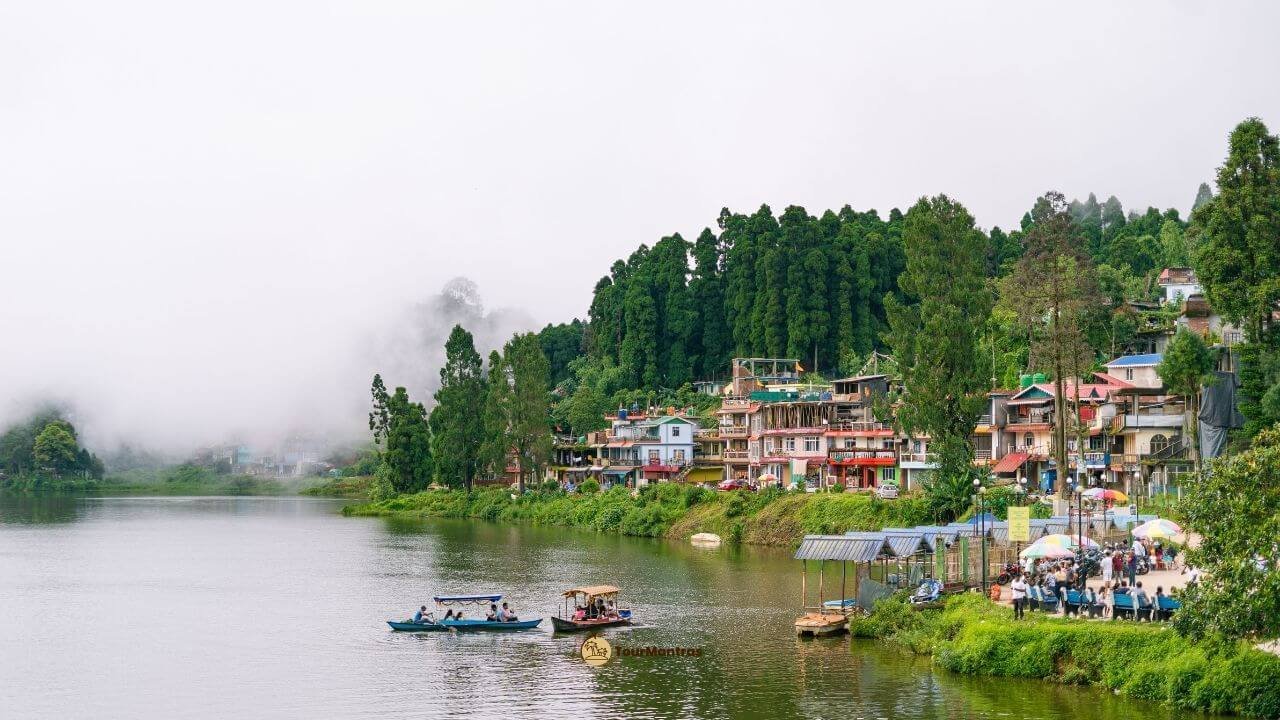
Everything in Mirik radiates outward from this lake. At 1.25 km long, Sumendu Lake — also called Mirik Lake — is flanked on one side by the Savitri Pushpaudyan garden and on the other by a dense pine forest, with an 80-foot arched footbridge called the Indreni Pull (Rainbow Bridge) connecting the two banks. A 3.5-km road circles the entire lake, and it’s genuinely one of the nicer short walks you’ll do in the region — chestnut and maple trees overhead, the odd horse clip-clopping past, and Kanchenjunga occasionally visible on a clear morning at the far end of the water. Boating is available in small shikara-style boats, horse riding operates along both banks, and there’s a stretch near the southern end where locals and tourists alike feed the fish gathered just below the surface.
You can also explore these 15 mountain holiday spots in Bengal.
2. Bokar Ngedon Chokhor Ling Monastery
Roughly two kilometres from the lake, on the way toward Rameetay Dara, this Tibetan Buddhist monastery belongs to the Kagyu lineage and was built in 1986 by Kyabje Bokar Rinpoche. It’s smaller and considerably less visited than the monasteries around Darjeeling, which oddly makes it more atmospheric — the chanting during morning prayers carries clearly through the compound, and the prayer wheels along the outer wall are worth a slow lap before you head back down.
3. Devisthan Temple
Sitting on a small hillock close to the lake, Devisthan is the principal Hindu shrine in Mirik, housing idols of Lord Shiva, Goddess Kali, the local deity Singla Devi, and Hanuman. It draws a steady stream of devotees rather than sightseers, and the short climb up gives a decent vantage point over the lake below.
4. Rameetay Dara
An easy walk from the lake, Rameetay Dara is one of Mirik’s better viewpoints for the snow-capped Himalayan range on one side and the flat expanse of the North Bengal plains on the other. It’s a popular sunrise and sunset spot for exactly that reason.
5. Tingling View Point
Tingling looks out over rolling tea gardens and winding valley roads rather than snow peaks, and on a clear day you can pick out the small hamlet of Soureni in the distance — itself known locally for its oranges. It’s a quieter, greener sort of view than Rameetay Dara, and worth the detour if tea country appeals to you more than mountain drama.
6. Simana Viewpoint
Simana sits directly on the Mirik–Darjeeling road, marking the India–Nepal border stretch. From here you get an open view toward Manebhanjan and the start of the Sandakphu trail, with Kanchenjunga forming the backdrop. It’s become something of an unofficial pit stop for anyone travelling between the two towns, and it’s also where the road itself briefly runs as the literal dividing line between the two countries.
7. Thurbo Tea Estate
Barely two kilometres from Sumendu Lake, Thurbo is one of the region’s more respected tea estates. With prior permission from the estate manager, you can walk through the gardens and watch the orthodox tea-making process — plucking, withering, rolling, and drying — carried out much as it has been for generations.
Mirik Top 5 Places at a Glance
If you’re pressed for time, the shortlist most local drivers and guides recommend runs:
- Sumendu Lake
- Bokar Monastery
- Devisthan
- Rameetay Dara
- Simana Viewpoint
That circuit alone covers the essential Mirik local sightseeing and is comfortably doable in a single day, leaving a second day free for the tea gardens and orchards further out. Most taxi drivers in town quote this same shortlist when asked about sightseeing in Mirik, which tells you it’s less a marketing list and more just what people actually go and see.
Which Are the Less Crowded Places Near Mirik — The Offbeat Circuit
Mirik is already a quieter alternative to Darjeeling. Still, even here, a handful of spots see barely any footfall — arguably some of the best places to visit in Mirik if solitude matters more to you than convenience.
1. Rai Dhap
A man-made reservoir built to supply drinking water to the town, Rai Dhap, sits inside a belt of alpine pine forest and functions as an unofficial picnic ground. Himalayan bird species turn up here often enough that it’s become a minor birdwatching spot in its own right, and the stillness of the water against the surrounding forest makes it one of the more peaceful, less crowded places near Mirik.
2. Murmah and Soureni Orange Orchards
Between November and February, the hillsides around Murmah and Soureni Busty turn a deep, ripening orange — literally. These are the villages most associated with Mirik’s citrus harvest, and a handful of orchards allow visitors to walk in and buy fruit directly from the growers.
3. Gopaldhara Tea Estate
A short drive out of town, Gopaldhara is one of the larger tea gardens accessible from Mirik and often gets folded into the broader “Mirik Excursion” circuit that also covers Simana and the Nepal border road. The estate is vast enough that even a slow drive through it feels like a proper outing rather than a quick photo stop.
4. Pashupati Nagar — The Nepal Border Market
Right on the India–Nepal frontier, Pashupati Nagar is where you can cross on foot with just a valid photo ID — no passport required — into a small market selling imported clothes, electronics, and household goods at notably cheaper rates than back home. It’s touristy in its own low-key way, but genuinely useful if you like the novelty of standing in two countries within the same afternoon.
5. Kawlay Dara
Less visited than Rameetay Dara and Tingling, Kawlay Dara offers its own sweeping view over Mirik and the surrounding valley, usually without another tourist in sight.
You can also explore these 19 Top Offbeat Places in West Bengal to Visit With Family or Friends
Eco Tourism & Adventure Activities in and Around Mirik
Mirik doesn’t have the adrenaline-heavy adventure sports scene that Darjeeling does, but what it offers is arguably better suited to families and slower travellers.
- Boating and Horse Riding: Both available directly on Sumendu Lake, with horses working set circuits around the western bank near the Indreni Pull footbridge.
- Nature Walks: The pine forest circling the lake’s western edge and the Dhupi forest trail both offer easy, well-marked walking routes without needing a guide.
- Tea Garden Visits: Thurbo and Gopaldhara both permit guided walks through the gardens, and the more curious traveller can usually arrange to watch the factory floor in action during the plucking season.
- Orange Orchard Tours: Best from November through February, when Murmah and Soureni are at their most photogenic, and the fruit is at its sweetest.
- Birdwatching: Rai Dhap and the forest belt around the lake attract a reasonable variety of resident and migratory Himalayan species, particularly in the early morning.
How to Reach Mirik By Air, Rail, and Road
Getting here is refreshingly uncomplicated compared with some of the more remote Himalayan hill stations, which is part of why a Mirik tour package from Siliguri has become such a common short-break option for people in North Bengal.
By Air
The nearest airport is Bagdogra (IXB), roughly 52–55 km from Mirik. Bagdogra connects directly to Kolkata, Delhi, and several other major Indian cities, and from there it’s about 1.5 to 2 hours by taxi or shared jeep up to Mirik. This makes a Mirik tour package from Kolkata genuinely straightforward — fly into Bagdogra in the morning and you can be at Sumendu Lake by early afternoon.
By Rail
New Jalpaiguri (NJP) is the closest major railhead, about 60 km away. NJP is well connected to Kolkata, Delhi, Guwahati, and most of the national rail network, and taxis from the station take roughly 2 hours to reach Mirik.
By Road
This is where Mirik really shines. It sits almost equidistant from three major hill towns — around 42 km from Siliguri (about 1.5 hours), roughly 46 km from Kurseong (about 1.5 hours), and approximately 49 km from Darjeeling (around 2 hours). Shared jeeps, private taxis, and the occasional bus service all run these routes daily, and the drive itself — winding through tea estates and pine forest — is genuinely one of the better parts of the trip. Anyone building a Mirik tour package from Darjeeling typically treats it as an easy half-day add-on rather than a separate expedition, and the same logic applies well to a wider Darjeeling Mirik tour that also loops in Kalimpong or Kurseong.
Which Food to Try in Mirik
Mirik’s food scene is smaller than Darjeeling’s, but it draws from the same Nepali, Tibetan, and Bengali mix.
- Momos: Steamed dumplings, usually pork, chicken, or vegetable, sold from small stalls all around the lake and the bazaar.
- Thukpa: A warming Tibetan noodle soup, ideal on the cooler evenings even in summer.
- Sel Roti: A crisp, ring-shaped rice bread, typically eaten at breakfast from morning stalls.
- Gundruk Soup: Fermented leafy greens turned into a tangy, filling broth — a proper Himalayan comfort dish.
- Fresh Local Trout and Fish Dishes: Given the lake’s presence, several restaurants nearby serve freshwater fish prepared simply, often pan-fried with local spices.
- Local Orange Juice and Preserves: Made straight from the Murmah and Soureni harvest — worth trying fresh rather than bottled.
Recommended Places to Eat: The lakeside stalls near the handicraft market for quick bites, Goodricke Café along the lake for a sit-down meal with a view, and the small Tibetan-run eateries near the bus stand for thukpa and momos.
What Are the Places to Stay in Mirik
Luxury and Boutique
Tea-estate stays around Gopaldhara and similar properties offer a quieter, more premium version of a Mirik holiday, with colonial-style interiors and direct garden access.
Mid-Range
Swiss Cottage, the DGHC-run motel near the helipad, remains one of the more distinctive mid-range choices, sitting at Mirik’s highest point with sweeping views. Several private hotels in the Krishnanagar area — where most of the town’s accommodation is concentrated — offer comparable comfort at similar rates.
Budget
Homestays around Bunkulung (also known as Jayanti Nagar) and Rangbhang combine fish farming, home-cooked meals, and genuinely warm hospitality at a fraction of hotel rates — usually the better value option if you don’t mind simpler rooms.
Which Are the Places to Shop in Mirik
- Mirik Bazaar: The main commercial stretch of town, good for everyday souvenirs, snacks, and local produce.
- Lakeside Handicraft Market: Open roughly 10 AM to 4 PM by Sumendu Lake, selling handmade curios and souvenirs aimed squarely at boat-ride tourists.
- Pashupati Nagar Market: The border market near the Nepal crossing, known for imported clothing, electronics, and household goods at lower prices.
- Tea and Orange Stalls: Scattered through the bazaar and near the orchards — the best place to pick up fresh Mirik tea and, in season, oranges straight from the growers.
What is the Average Travel Cost Per Person to Visit Mirik
Understanding the likely Mirik tour cost upfront makes budgeting far easier.
Budget traveller (shared jeeps, homestay, local food): INR 1,200–INR 2,000 per day
Mid-range traveller (private taxi, 3-star hotel, restaurant meals): INR 2,500–INR 4,500 per day
Luxury traveller (tea-estate stay, private guide, fine dining): INR 5,500–INR 10,000+ per day
Typical 2-night/3-day costs per person:
- Budget: INR 4,000–INR 6,500 (transport, accommodation, and meals included)
- Mid-range: INR 9,000–INR 14,000
- Luxury: INR 18,000–INR 30,000
What is the Full Mirik Tour Plan — Standard Itinerary
This 3-day full Mirik tour plan covers the core sightseeing, the offbeat spots, and a bit of breathing room, and it doubles as the practical backbone of any complete Mirik tourism guide with itinerary and sightseeing places you’ll find online.
Day 1 — Arrival and the Lake
Arrive from NJP, Bagdogra, Siliguri, or Darjeeling and check into your hotel or homestay. Spend the afternoon walking the full 3.5-km loop around Sumendu Lake, stopping at the Indreni Pull footbridge for photographs. Try boating if the weather holds. Evening browsing at the lakeside handicraft market, followed by dinner at one of the Tibetan eateries near the bazaar.
Day 2 — Monastery, Temple, and Viewpoints
- 7:00 AM: Early visit to Devisthan Temple before the morning crowd
- 9:00 AM: Bokar Ngedon Chokhor Ling Monastery
- 11:00 AM: Rameetay Dara and Kawlay Dara viewpoints
- 1:00 PM: Lunch near the lake
- 3:00 PM: Tingling View Point and, if time allows, a short stop at Thurbo Tea Estate
- Evening: Free time by the lake or an early night if you’re heading out to Simana the next morning
Day 3 — Simana, Border Market, and Departure
- 8:00 AM: Drive to Simana Viewpoint for the Kanchenjunga and Sandakphu trail views
- 10:00 AM: Continue to Pashupati Nagar for the border market (carry a photo ID)
- 1:00 PM: Return toward Mirik or continue directly to Darjeeling, depending on your onward plans
- Afternoon: Departure toward NJP, Bagdogra, Siliguri, or onward to Darjeeling/Kalimpong
Travellers with an extra day often add a slow morning at Rai Dhap and the Murmah orange orchards (in season) before heading out, which stretches this into a comfortable 4-day version of the same full Mirik tour plan.
What Are the Mirik Tour Packages for Every Kind of Traveller
Not every trip to Mirik looks the same, and the right Mirik tour package really does depend on who’s travelling. Part of learning how to plan a Mirik trip properly is accepting that the “best” version of the itinerary changes depending on your group.
Mirik Tour Package for Families
Families tend to do best with a slower pace — a full day dedicated just to the lake (boating, horse riding, the handicraft market) followed by a gentler second day covering Devisthan, Bokar Monastery, and a tea-estate visit. Homestays in Bunkulung work well here, since children generally enjoy the informality and the fish-farming activity nearby.
Mirik Tour Package for Couples
Couples usually gravitate toward the quieter viewpoints — Kawlay Dara and Tingling over the busier Rameetay Dara — paired with an evening walk around the lake at dusk, when the crowds thin out and the light on the water turns genuinely lovely. A tea-estate stay near Gopaldhara suits this pace well.
Mirik Tour Package for College Students
Groups of students typically want more ground covered in less time: the full sightseeing circuit on day one, Simana and the Nepal border market on day two, and enough flexibility built in for spontaneous stops at viewpoints along the way. Budget homestays and shared jeeps keep costs manageable for larger groups.
Whichever version you choose, working out how to plan a Mirik trip around the right package rather than a generic one usually saves both money and frustration later.
Combining Mirik With Darjeeling, Kalimpong, and Kurseong
Because Mirik sits so centrally among the North Bengal hill towns, very few travellers treat it as an entirely standalone trip. A Darjeeling Mirik tour — sometimes booked the other way round as a Mirik Darjeeling tour, depending on which town you land in first — is the most common pairing. Mirik works as a one- or two-night stop either before or after the main Darjeeling leg, given the roughly two-hour drive between them. Most agencies selling Darjeeling Mirik tour packages structure it exactly this way, and if you’re drafting a Darjeeling Mirik tour plan yourself, that same sequencing is the sensible starting point.
Slightly more ambitious travellers extend this into a full Darjeeling Kalimpong Mirik tour, adding Kalimpong’s monasteries and nurseries into the same loop, or go further still with a proper Darjeeling Kalimpong Kurseong Mirik tour that strings together all four hill stations across five to seven days. Operators offering Darjeeling Kalimpong Kurseong Mirik tour packages typically structure the route as Kurseong first (closest to NJP), then Mirik, then Darjeeling, and finally Kalimpong before returning to the plains — though the reverse order works just as well depending on your entry point.
If you’re mapping out a Darjeeling, Kalimpong, Kurseong, Mirik tour plan yourself rather than booking a package, the rough math is: 1 night Kurseong, 2 nights Mirik, 3 nights Darjeeling, 1–2 nights Kalimpong. A tighter Darjeeling, Mirik & Kalimpong tour dropping Kurseong altogether comfortably fits into five days for anyone short on time.
What Are the Mirik Travel Tips in Summer (March to June)
Summer is Mirik’s busiest and most comfortable season, with clear skies more often than not and temperatures rarely climbing uncomfortably high even in May.
Things to Do: Walk the full lake loop in the cooler morning hours; visit Thurbo Tea Estate during the peak plucking season; book your Simana and Pashupati Nagar half-day early in your stay in case the weather shifts later.
Things to Avoid: Don’t skip carrying a light jacket — evenings still cool down quickly even in May; don’t assume weekend accommodation will be available without booking ahead, since this is peak season for weekend travellers from Siliguri and Kolkata.
What Are the Mirik Travel Tips in Monsoon (July to September)
Monsoon turns the hills a deep, saturated green, but landslide risk on the approach roads is real and worth checking before you set out.
Things to Do: Use rainy days for the monastery and Devisthan visits, both largely indoor or covered; enjoy the lakeside cafés, which take on a cosier character in the rain.
Things to Avoid: Don’t attempt the Pashupati Nagar or Simana drive without checking current road conditions; don’t leave your rain gear behind — light waterproofs are non-negotiable even on apparently calm mornings.
What Are the Mirik Travel Tips in Autumn (October to November)
Widely considered the best season here, autumn brings the clearest Kanchenjunga views of the year alongside comfortable daytime temperatures.
Things to Do: Prioritise Rameetay Dara and Simana for their best visibility of the season; visit in November if you can catch the start of the orange harvest around Murmah and Soureni.
Things to Avoid: Don’t leave viewpoint visits until late afternoon — cloud cover tends to build up again by 3 or 4 PM even on otherwise clear autumn days.
What Are the Mirik Travel Tips in Winter (December to February)
Winter is quiet, crisp, and noticeably milder here than in Darjeeling at a similar elevation, which makes it a genuinely underrated season for a visit.
Things to Do: Enjoy lower accommodation rates and thinner crowds at every sightseeing spot; time your trip for the orange harvest, which runs right through this season.
Things to Avoid: Don’t assume every homestay or smaller hotel stays open through the full winter — confirm directly before booking, since some close for the quieter months.
Wrapping Up on This Full Mirik Tour Plan
There’s a version of a Mirik trip that’s just a lake stop on the way to somewhere else — an hour by the water, a quick photo on the footbridge, back in the car. That version is fine, and plenty of people do exactly that, and it skips almost every one of the best places to visit in Mirik covered above.
But this full Mirik tour plan has tried to make the case for something a little more deliberate — a proper two or three days that takes in the monastery, the quieter viewpoints, the tea gardens, and that odd, small thrill of standing at an international border you can simply walk up to.
So pack your bags and visit Mirik soon. For more such information, follow TourMantras, the best online travel information portal for West Bengal tourism.
FAQ About Full Mirik Tour Plan
1) How do I plan a Mirik trip for a short weekend?
The simplest approach to planning a Mirik trip over a weekend is basing yourself near Sumendu Lake, covering the lake, Bokar Monastery, and Devisthan on day one, then Simana Viewpoint and Pashupati Nagar on day two before heading back. This full Mirik tour plan compresses comfortably into two days if needed.
2) What are the best places to visit in Mirik for a first-time traveller?
The simplest approach to planning a Mirik trip over a weekend is basing yourself near Sumendu Lake, covering the lake, Bokar Monastery, and Devisthan on day one, then Simana Viewpoint and Pashupati Nagar on day two before heading back. This full Mirik tour plan compresses comfortably into two days if needed.
3) How far is Mirik from Siliguri, Kolkata, and Darjeeling?
Mirik is about 42 km (1.5 hours) from Siliguri, roughly 49 km (2 hours) from Darjeeling, and reachable from Kolkata via Bagdogra Airport or NJP railway station, both followed by a 1.5–2 hour road journey.
4) Can Mirik be combined with Darjeeling, Kalimpong, and Kurseong in one trip?
Yes — this is one of the most popular circuits in North Bengal. A standard Darjeeling Kalimpong Kurseong Mirik tour runs roughly 5–7 days, typically sequenced as Kurseong, Mirik, Darjeeling, and Kalimpong, though the order can flex depending on where you enter the hills from.
5) Is Mirik suitable for families and college groups alike?
Yes. A Mirik tour package for families usually favours a slower pace centred on the lake and nearby temples, while a Mirik tour package for college students tends to pack in more sightseeing and the Nepal border market within the same two or three days.
6) What is Mirik Excursion actually made up of?
Locally, a “Mirik Excursion” usually refers to the half-day loop covering Simana Viewpoint, Gopaldhara Tea Estate, the India–Nepal border, and Sumendu Lake — a compact taste of the region’s sightseeing achievable even as a day trip from Darjeeling.
7) Do I need a passport to visit the Nepal border near Mirik?
No — at the Pashupati Nagar crossing near Simana, a valid photo ID is sufficient for a short visit to the border market on the Nepal side. A passport is not required for this particular crossing point.

The Chief Editor of TourMantras is a digital marketing professional, but also a travel enthusiast at the same time. He loves researching the latest tourist destinations in India or abroad and visiting them in person when possible. After that, he loves posting them on our website just to satisfy his passion and provide accurate information to travellers.